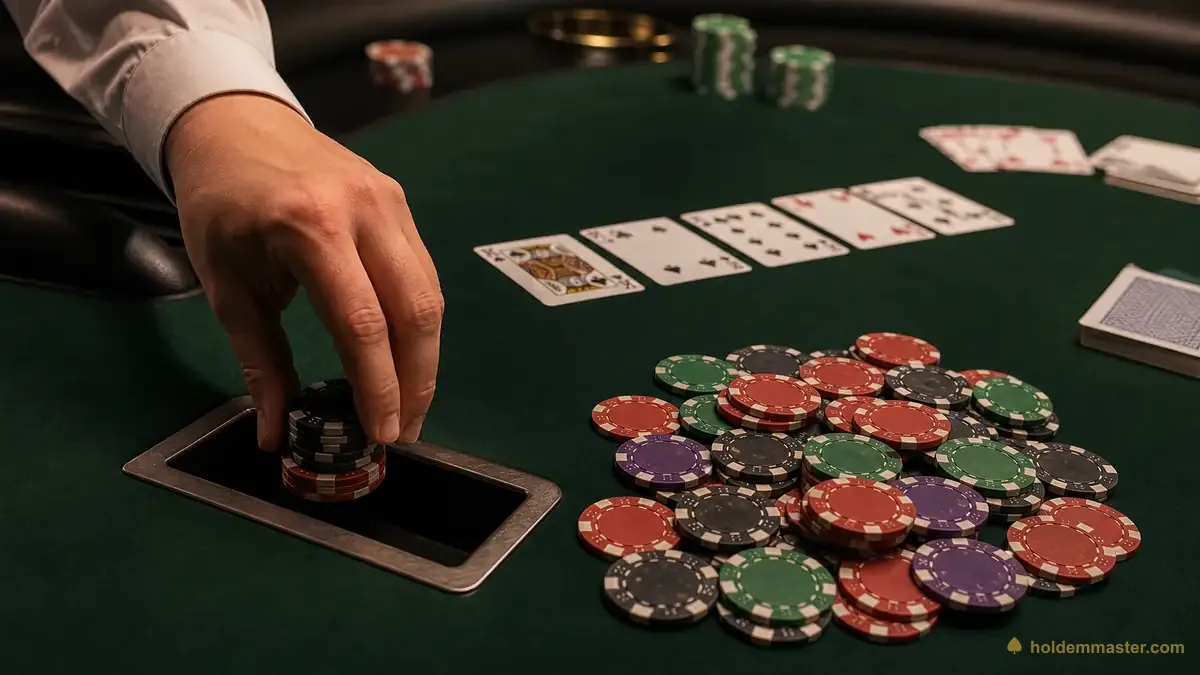
It took me a depressing month of "break-even" sessions to figure out where my money was actually going. I wasn't losing to the other players — I was beating them, slightly. I was losing to the house's cut on every pot I won. That quiet fee is called the rake, and until you understand it, you can be a winning player on paper and a losing one at the cashier.
Rake is how a cardroom makes money on a game where it doesn't play a single hand. Below is exactly what it is, every way it's collected, the honest math on how much you actually pay a session, and how rakeback claws some of it back. It's the fee that decides whether beating small-stakes poker is even possible — and one of the most expensive terms in the  poker glossary to misunderstand.
Rake at a glance
What Is Rake in Poker?
Rake is the commission a cardroom takes from a cash game for hosting it. Because poker is played player-against-player — the house never bets — the rake is how the room, casino, or app actually earns its money. It's a service fee for the dealer, the table, the chips, and the security, skimmed a little at a time from the pots.
In a cash game it's usually taken straight from the pot: a small percentage of the money in the middle, dropped into a slot in the table before the winner is paid. In a tournament it works differently — the fee is baked into your buy-in up front (more on that below). Either way, the rake is separate from anything you win or lose to other players, which is exactly why it's so easy to overlook. This is one of the biggest practical differences between a  cash game and a tournament.
How Is Rake Taken? Pot Rake, Time Charge & Dead Drop
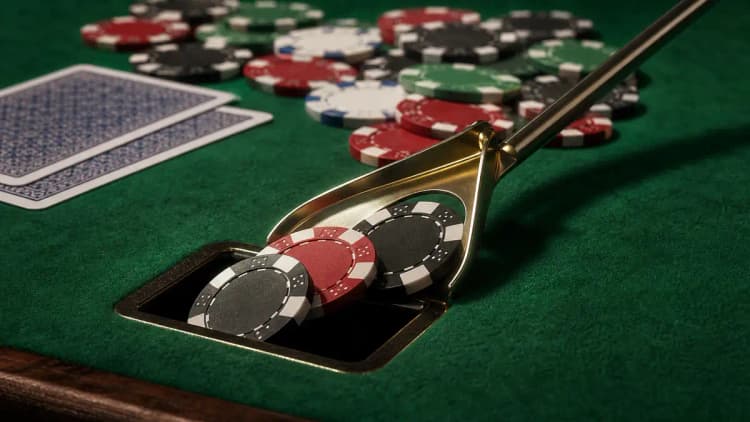
There isn't just one kind of rake. How the house collects its money depends on the stakes and the room, and the differences matter — four methods, and the one your room uses decides how much you actually pay:
| Type | How it's taken | Typical amount | Where you'll see it |
|---|---|---|---|
| Pot rake (scaled) | % of eligible pots, up to a cap | 2.5–10%, capped $1–$6 | Most low/mid cash games, online |
| Time charge | Flat fee per player, every 30 min | ~$10–$15 per hour | High-stakes live ($10/$20+), and every stake where pot rake isn't an option |
| Dead drop | Button pays a set rake each hand | Fixed per hand | Some live rooms |
| Tournament fee | Charged with the buy-in up front | ~5–20% of buy-in | Almost every tournament |
A few rules govern how pot rake is actually skimmed:
- •No flop, no drop. In most rooms, if the hand ends before the flop — everyone folds to a preflop raise — the house takes no rake at all. (Not universal: a few sites, notably GGPoker, do rake some preflop pots, so check your room.)
- •The rake cap. In most rooms the house doesn't take the full percentage on a huge pot — it stops at a maximum, commonly $3–$6 live and $1–$3 online. Caps do rise as the stakes rise, but not proportionally — they move in coarse steps, so several stakes often share the same cap. On top of that they often shrink when fewer players are dealt in (a heads-up pot might be capped at $1).
- •Time charge instead of pot rake. At higher stakes, rooms often stop raking pots and instead collect a flat fee — say $10–$15 an hour per player, taken every half-hour. This favors players who win big pots — though what you save is the capped rake, not a slice of the pot: against a $3–$6 cap, a $2,000 pot was only ever giving up a few dollars.
- •Dead drop. A less common method where only the player on the button pays a set rake each hand, collected before the cards are dealt — designed so big-pot winners aren't taxed more than anyone else.
How Much Rake Do You Actually Pay?
Here's the part that changed how I think about the game. The percentage sounds tiny — 5%, capped at a few bucks — but you pay it on nearly every pot you win, for hours.
A live $1/$2 game. With 10% rake capped at $5 and roughly 30 hands dealt an hour, many contested pots reach or come close to the cap. A single busy table can pay $100+ an hour into the drop between all the players. That money comes straight out of the collective winnings — it's the reason a table full of roughly even players slowly bleeds chips to the house.
The low-stakes "rake trap." This is the punchline every beginner should hear. Because the cap barely falls as you move down in stakes, the lower you play, the bigger a bite the rake takes proportionally. Here is a worked example at online NL50 (illustrative — the exact figure moves with how many pots you contest and how the room applies its cap, not with how many hands you log). The two caps below sit one inside the usual online band and one outside it: $2 is inside the $1–$3 most rooms post, $4 is above it.
| Same player, same game | Rake paid | Result |
|---|---|---|
| Room with a $2 cap | ~5 bb/100 | +8 bb/100 win rate stays a winner (+3) |
| Room with a $4 cap | ~8–9 bb/100 | +8 bb/100 breaks even or turns into a loser (0 to −1) |
Same skill, same edge over the field — and the rake alone is the difference between winning and losing. That's why serious low-stakes grinders obsess over rake structure and why pot odds and win rate always have to be read after the house takes its cut.
What Is Rakeback?
Since the house profits from the volume you generate, most rooms give some of it back to keep you playing. Rakeback is a percentage of the rake you personally pay, returned to you — usually through points, cashback, or a loyalty program, paid out weekly or monthly. A 30% rakeback deal simply means you get back 30 cents of every dollar you rake.
There are two ways it's calculated:
For a casual player, rakeback is a minor perk. For a high-volume regular it's enormous: the gap between a 20% and a 40% deal scales with the rake you actually generate, so it only turns into serious money if you're putting in real volume at meaningful stakes — and for many break-even grinders, rakeback is their profit. It effectively lowers your true rake, so it's worth checking before you pick where to play. Just be aware that much of the rakeback advice online is affiliate-driven — treat "sign up here" pages with the skepticism you'd give any sales pitch.
Do Tournaments Have Rake?
Not the pot kind — but you still pay a fee, and it's hiding in plain sight. A tournament entry price may show the prize-pool contribution and fee separately with a "+" sign; some series, including the WSOP, quote a single buy-in with the fee already included. In the split format:
A $100 + $9 tournament means $100 goes into the prize pool and $9 is the house's fee.
That fee — also called the juice or vig — is the tournament equivalent of rake. It's usually 5–20% of the buy-in, and it's flat: you pay it whether you bust first or win the whole thing. Lower buy-ins carry proportionally higher fees (a $3 + $0.30 sit-and-go is 10%), and because fast turbo formats compress your edge, the fee bites hardest there — the lower the percentage, the more of your skill survives it. Since a tournament's structure is entirely different from a cash game's, the way you pay to play is too — a distinction worth understanding alongside the tournament vs cash game fundamentals.
Online vs Live Rake: Which Is Higher?
It's a genuine trade-off, and the answer surprises people:
- •Live rake tends to be a higher percentage (often 10%) with a higher cap ($3–$6) — but you only play ~30 hands an hour, so you pay it fewer times.
- •Online rake is usually a lower percentage (3–5%) with a smaller cap ($1–$3) — but you might see 250+ hands an hour across multiple tables, so a volume grinder can pay more rake per hour than a live player despite the lower rate.

FAQ
The 3 Things to Remember
1. Rake is the house's cut for hosting the game — usually 2.5–10% of eligible pots up to a small cap, and it's separate from what you win or lose to opponents. 2. It hits low stakes hardest. The cap barely moves as you drop down, so proportionally you pay the most rake at the bottom — the "rake trap" that makes micro-stakes so hard to beat. 3. Rakeback and structure matter. Getting 20–40% of your rake back, and choosing rooms with player-friendly caps, can flip your long-term result — measure everything after the rake.
Now that you can see the house's cut, the numbers you read everywhere else make more sense: your pot odds, your win rate, and why a straddle that bloats the pot also quietly feeds the rake. Poker is beatable — but only once you're beating the other players by more than the house takes.