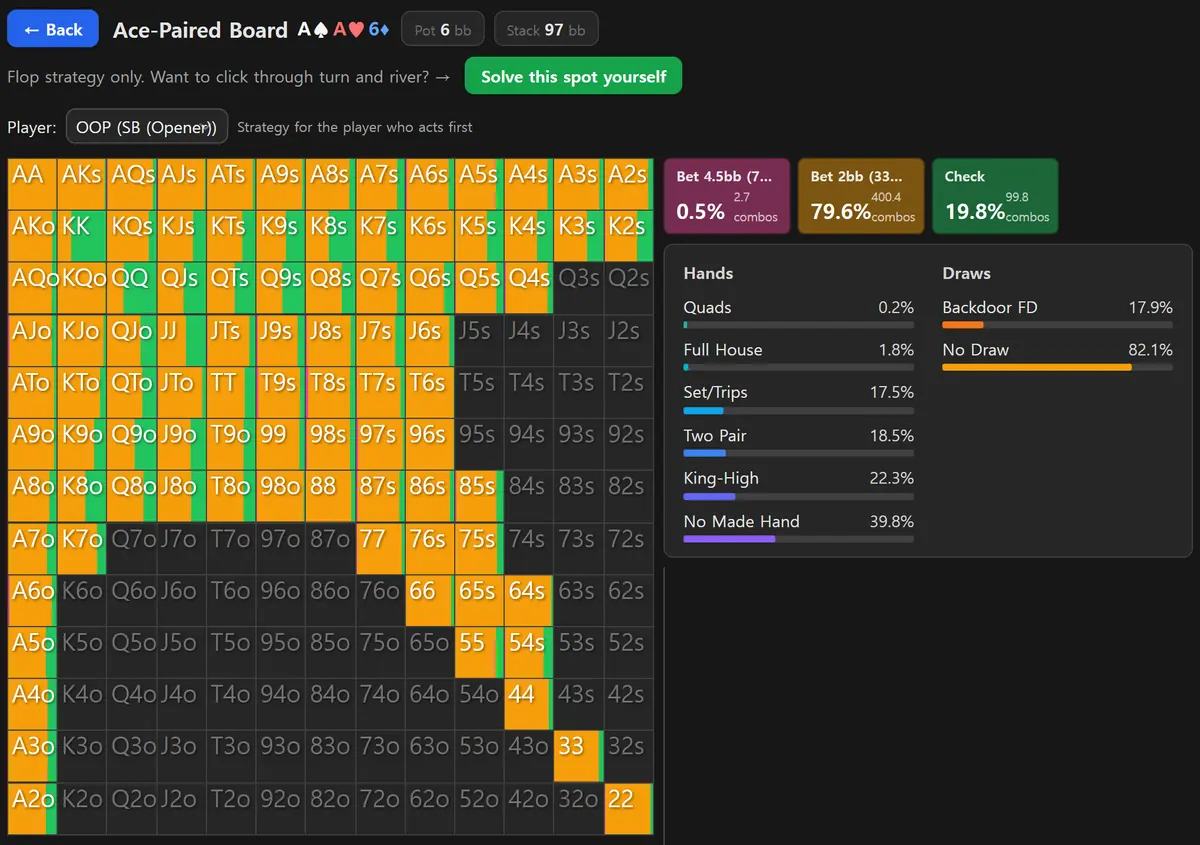
Two Aces on the Flop and the Bet Jumps to 80%
One paired flop gets a 3% bet and another gets 80.1%. On A-A-6 the ace belongs to the raiser — and the trips that beat you are missing from the caller's range.
10 min read
Practical guides that explain not just what beats what, but why — and how to use it at the table.
One paired flop gets a 3% bet and another gets 80.1%. On A-A-6 the ace belongs to the raiser — and the trips that beat you are missing from the caller's range.
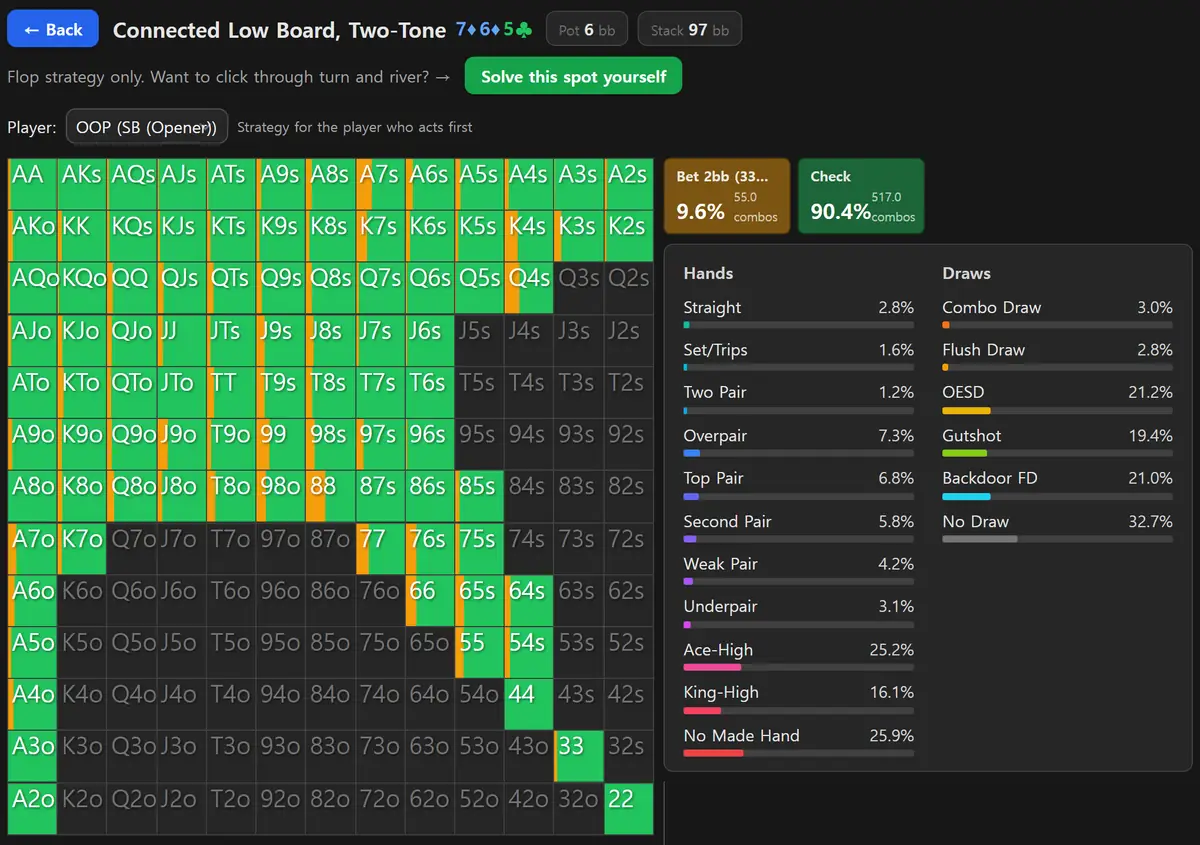
Nothing changed but three cards. On 7-6-5 the small blind that bet 67.4% one board earlier now bets 9.6% — the clearest read on board texture in poker.
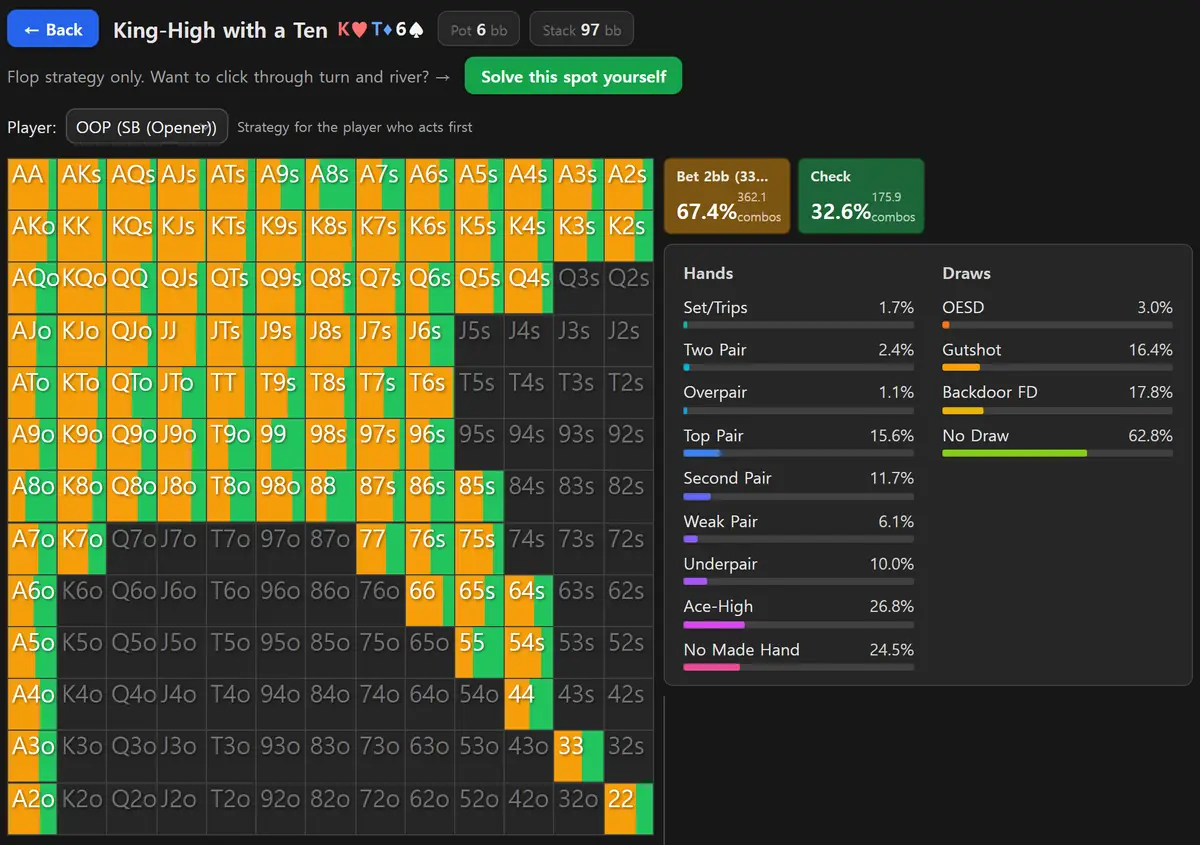
Blind vs blind on K-T-6, the small blind is first to act with no position — and bets 67.4%. Here is how a range edge drags equity realization past 100%.
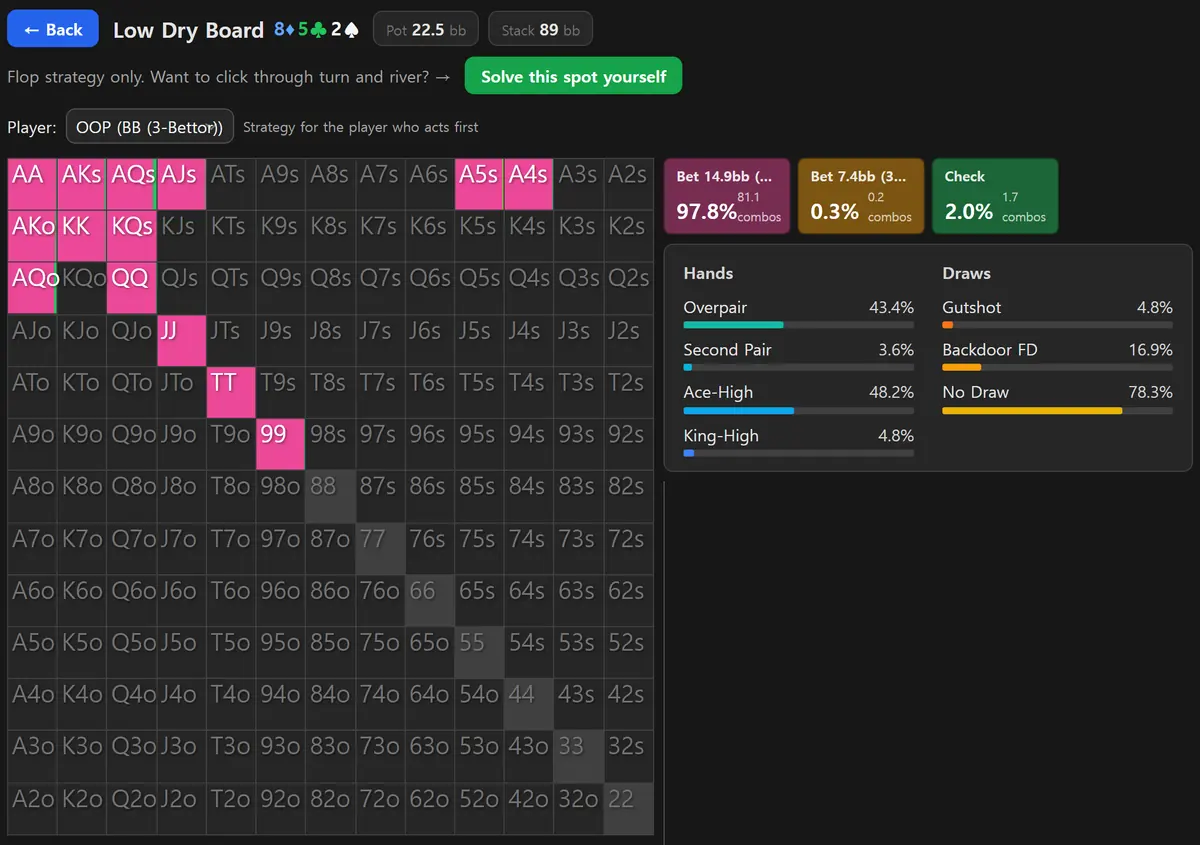
In a 3-bet pot on 8-5-2, only three combos in the big blind's range paired the board — and it fires two-thirds pot 97.8% of the time. Here is why.
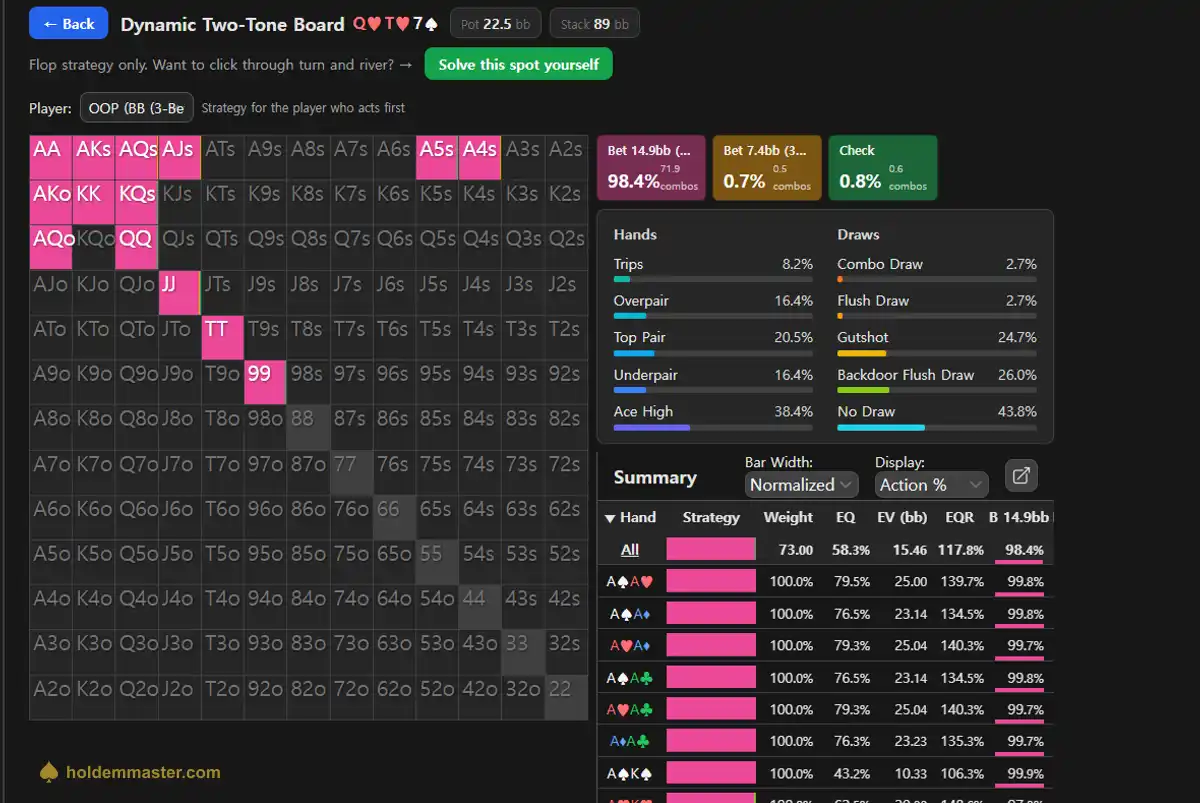
The solver had two bet sizes on this two-tone flop and put 98.4% of its range into one. Two thirds of the pot is the price that breaks 38 of 40 draws.
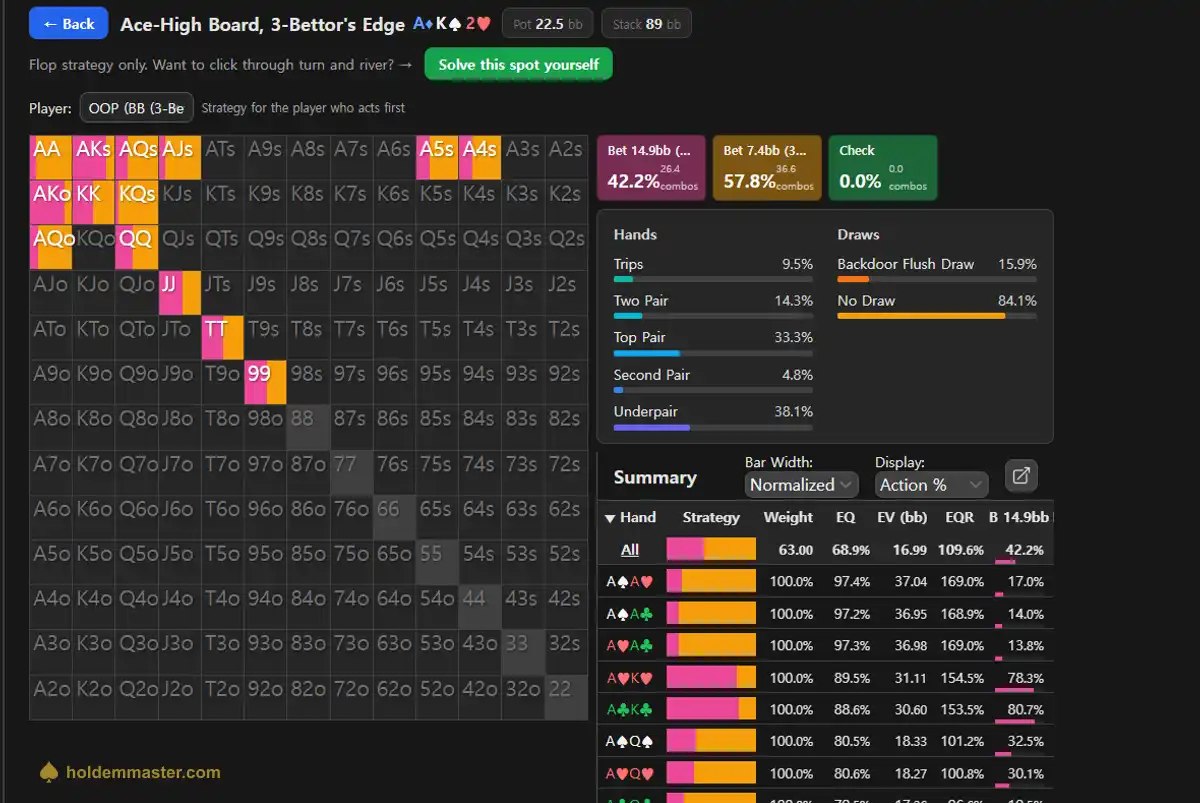
In this 3-bet pot the solver never checks — all 63 combos bet. Not because the range is strong, but because the caller has no pocket aces or kings left.
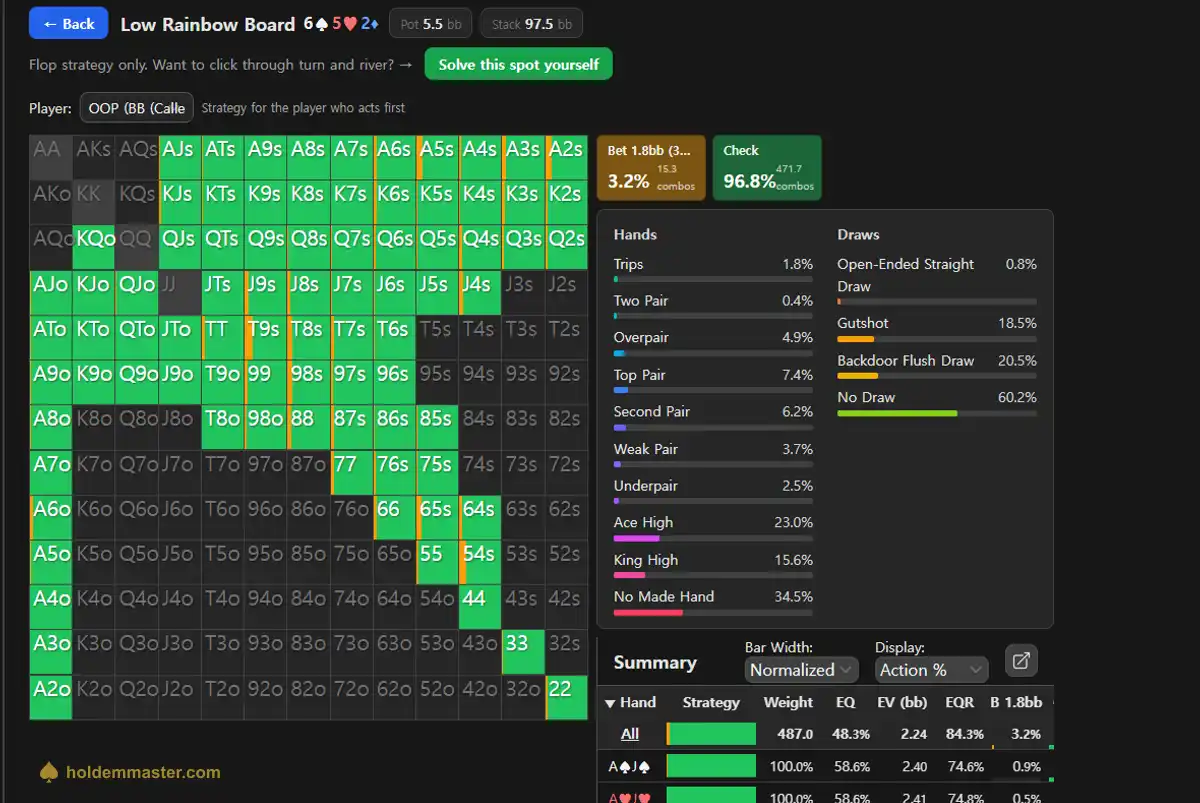
On 6-5-2 exactly one hand makes a straight and neither player holds it. So the big blind checks 96.8% — and saves all of its aggression for the check-raise.
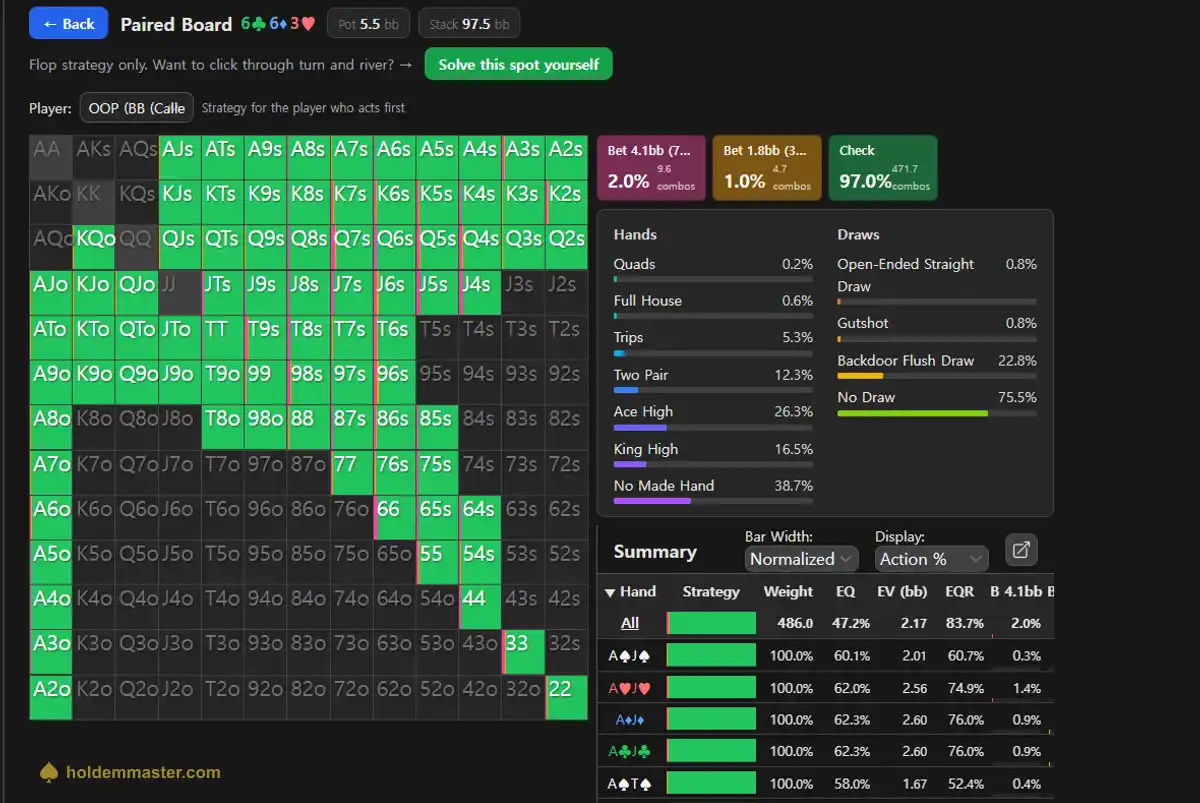
On 6-6-3 the caller holds more trips than the raiser — 26 combos against 20 — and checks 97% anyway. Here is what a paired flop actually rewards.
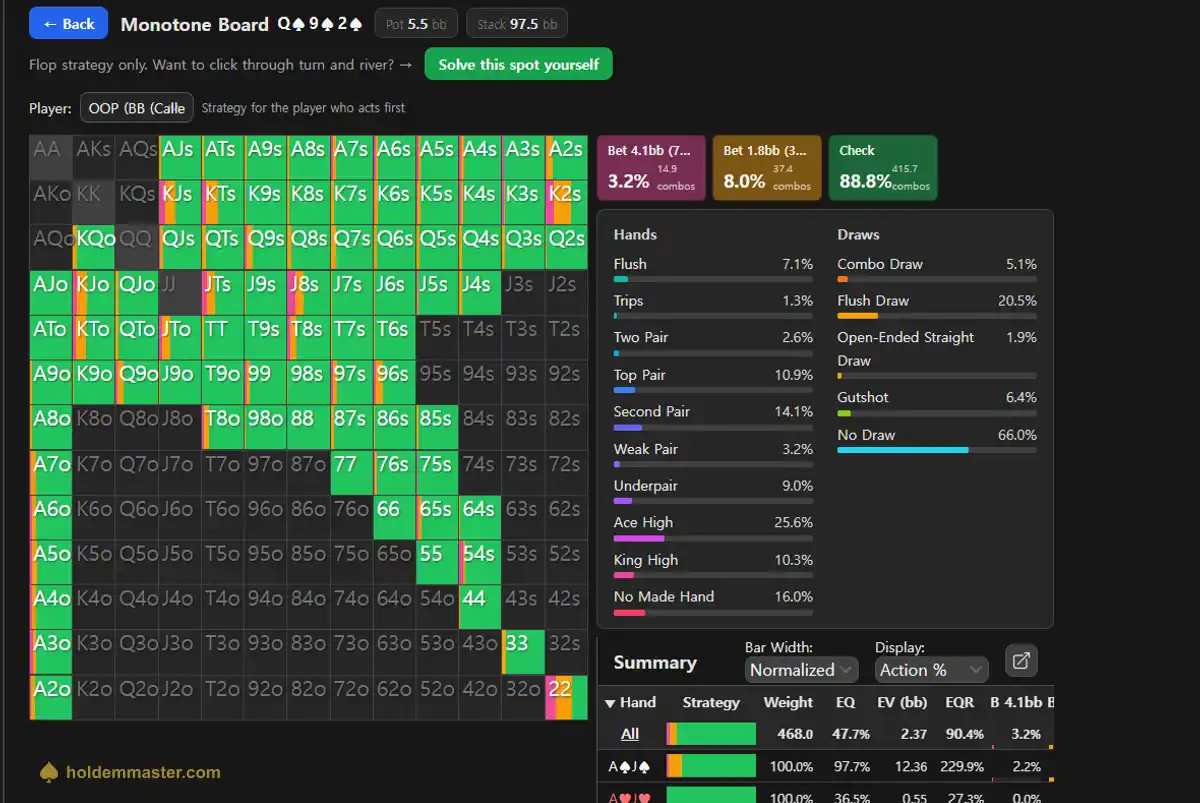
On a monotone flop the big bet nearly disappears — 3.2%. Even the nut flush checks 69.9% on average. Here is why size collapses when three suits match.
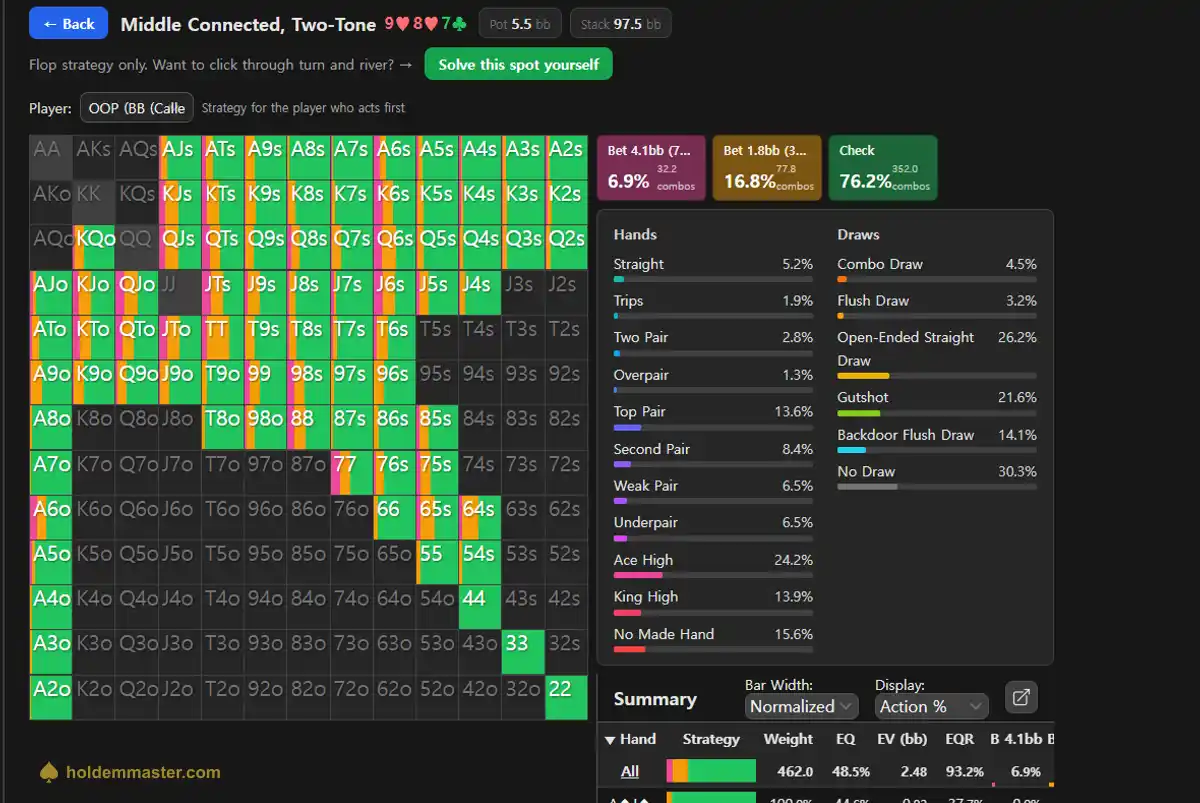
In poker a donk bet reads as a beginner mistake. On 9-8-7 a solver leads 23.7% — here is the board condition that makes leading correct, and the sizing.
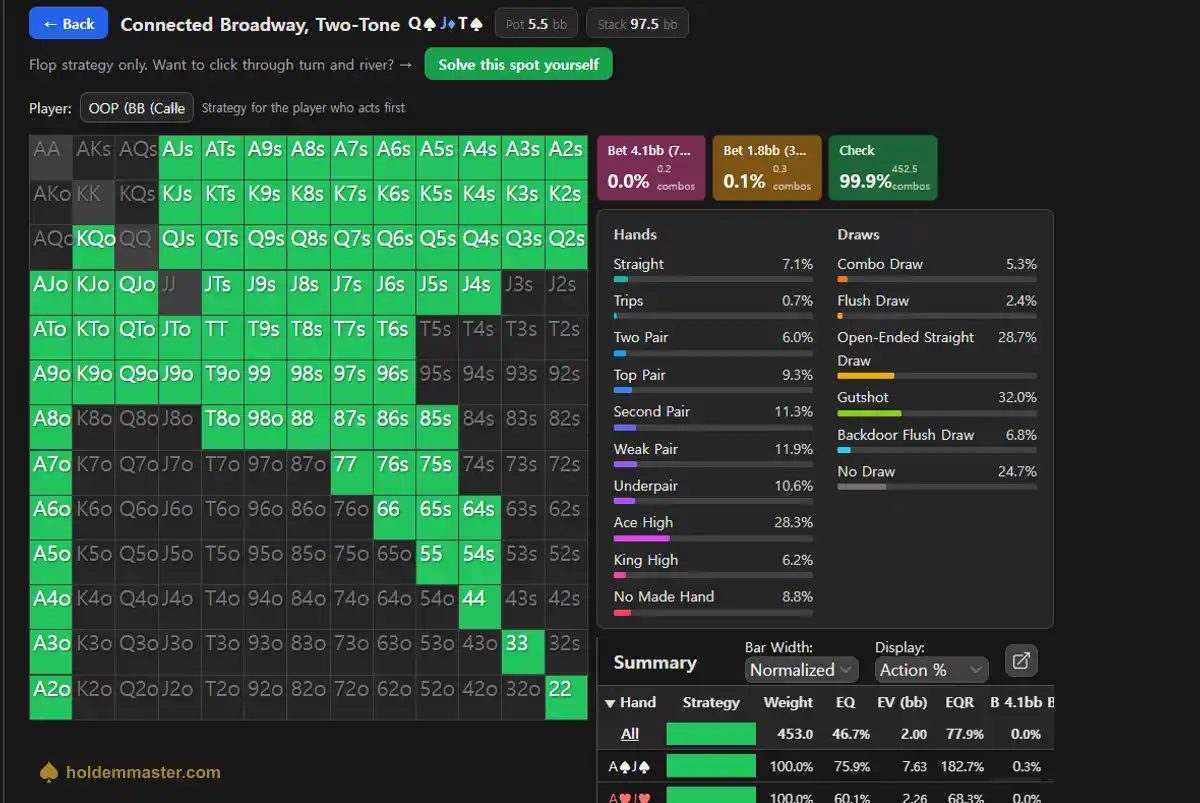
On Q-J-T two-tone, 68% of the big blind's range holds a draw and it still checks 99.9%. Nut advantage — not range advantage — is what decides this flop.
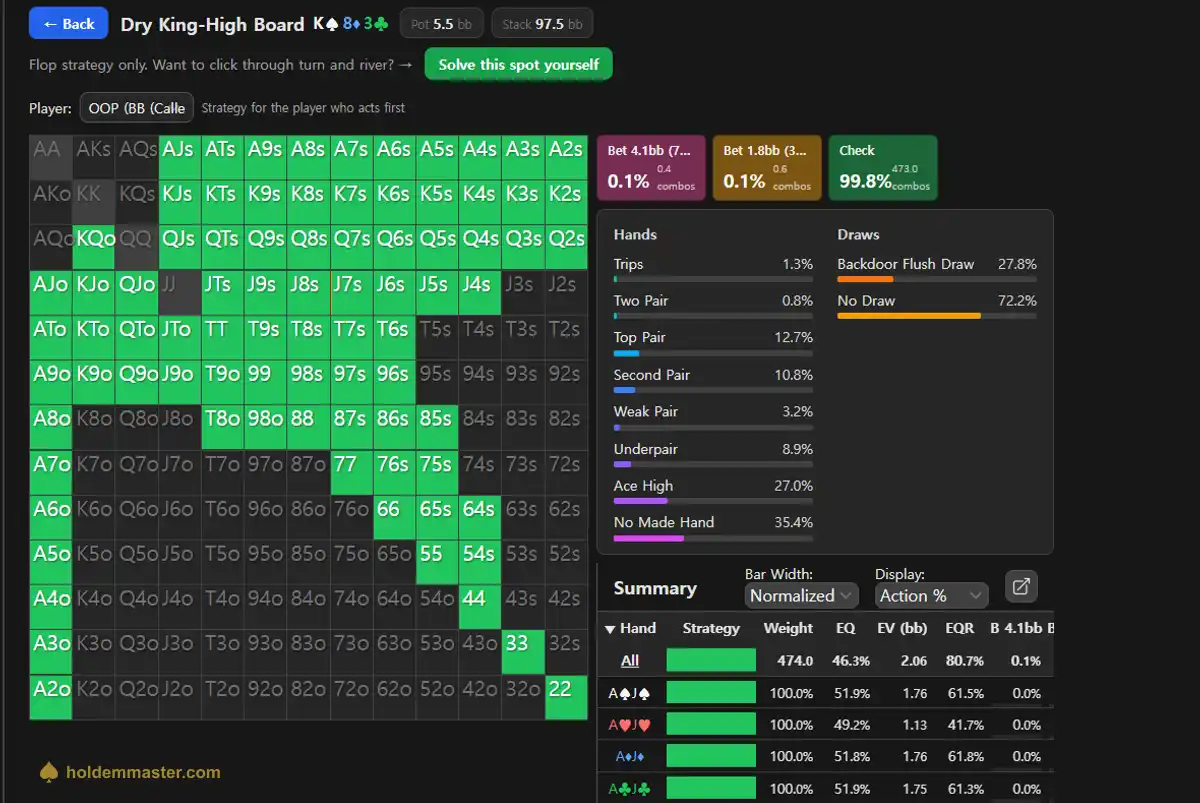
On K-8-3 the big blind checks 99.8% — a purer range check than ace-high. One missing hand explains it, and equity realization does the rest.
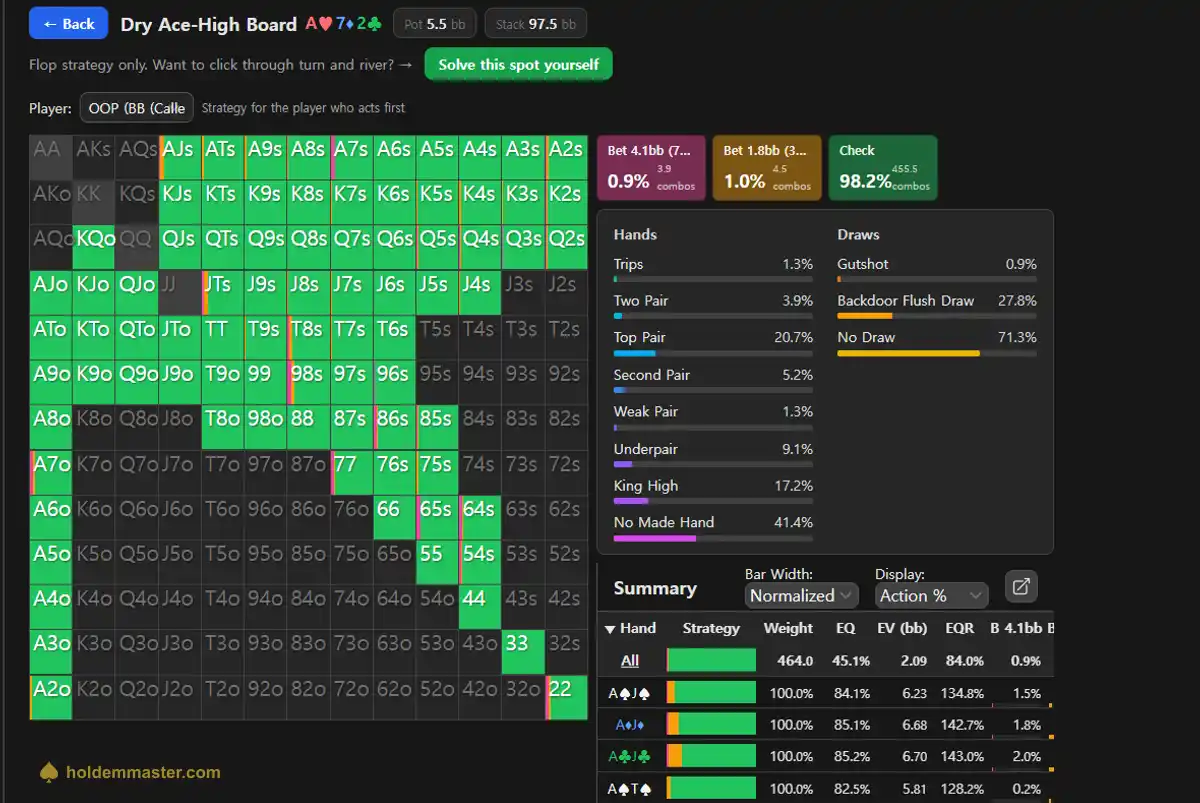
You flop top pair on A-7-2 and want to lead. A solver checks 98.2% of the big blind's range — the exact c-bet frequencies, and why equity isn't the reason.
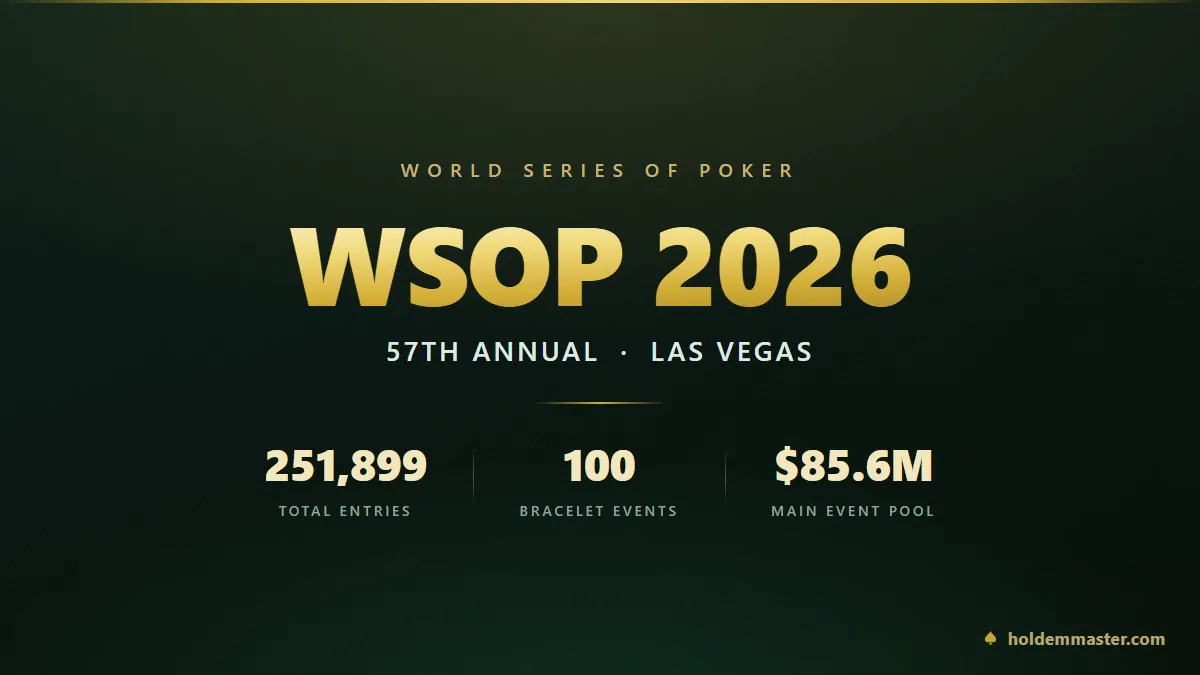
Lucas Jumalon won the 2026 WSOP Main Event for $10,000,000 — a 22-year-old whose best previous cash was $22,945. Full final table results and payouts.
Folding is the most underrated winning skill. When to fold preflop and on every street, the pot-odds threshold, and how to lay down a big hand without tilting.
What a continuation bet is, which flops to c-bet and which to check, exact sizing — small on dry boards, big on wet — and how often to fire in position.
What a 3-bet is and why it's called that, when to 3-bet for value or as a light bluff, the exact sizing math, and how to respond when someone 3-bets you.
Winning poker isn't ten disconnected tips — it's the same five decisions every hand: position, hand selection, raise-or-fold, c-betting, and when to let go.
Limping means just calling the big blind preflop. Why it's usually a mistake, the spots where it's actually fine, and how good players punish limpers.
Every poker term you'll hear at the table, explained simply and grouped by situation: betting, positions, hands, slang, and the terms people always mix up.

A bad beat is losing as a big favorite when your opponent gets lucky. How it differs from a cooler, the bad beat jackpot, and why it's secretly good for you.
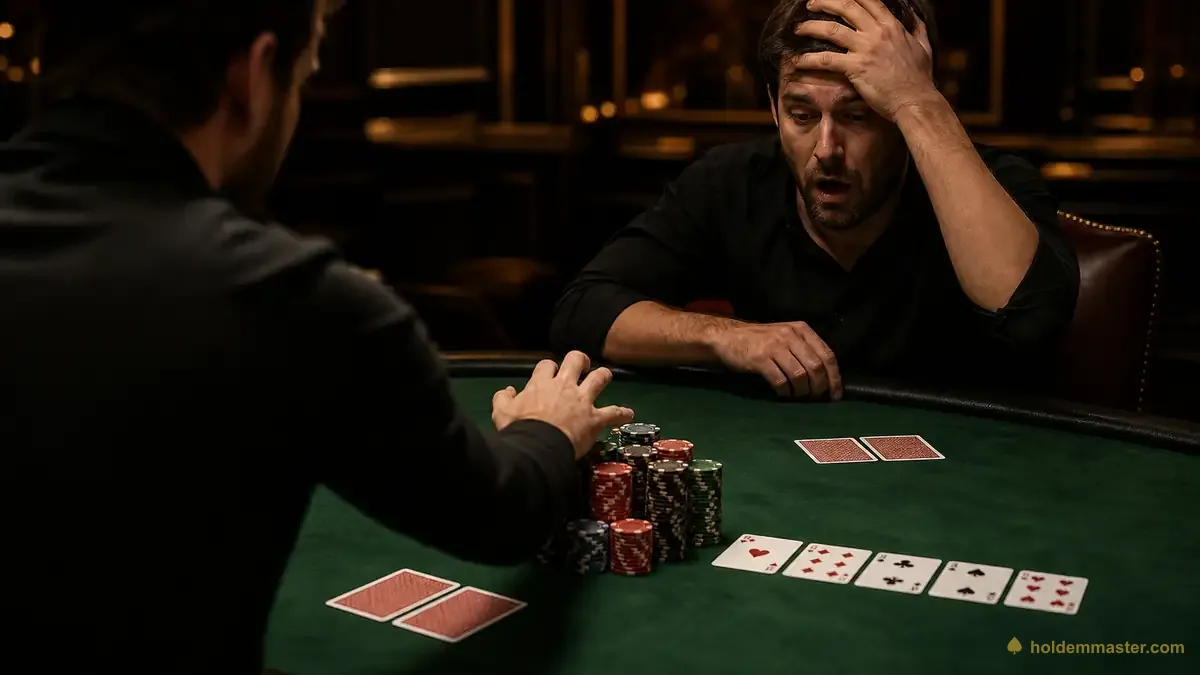
A cooler is when your monster hand runs into a bigger one and folding was never an option — and why it's not a bad beat, with the classic examples.
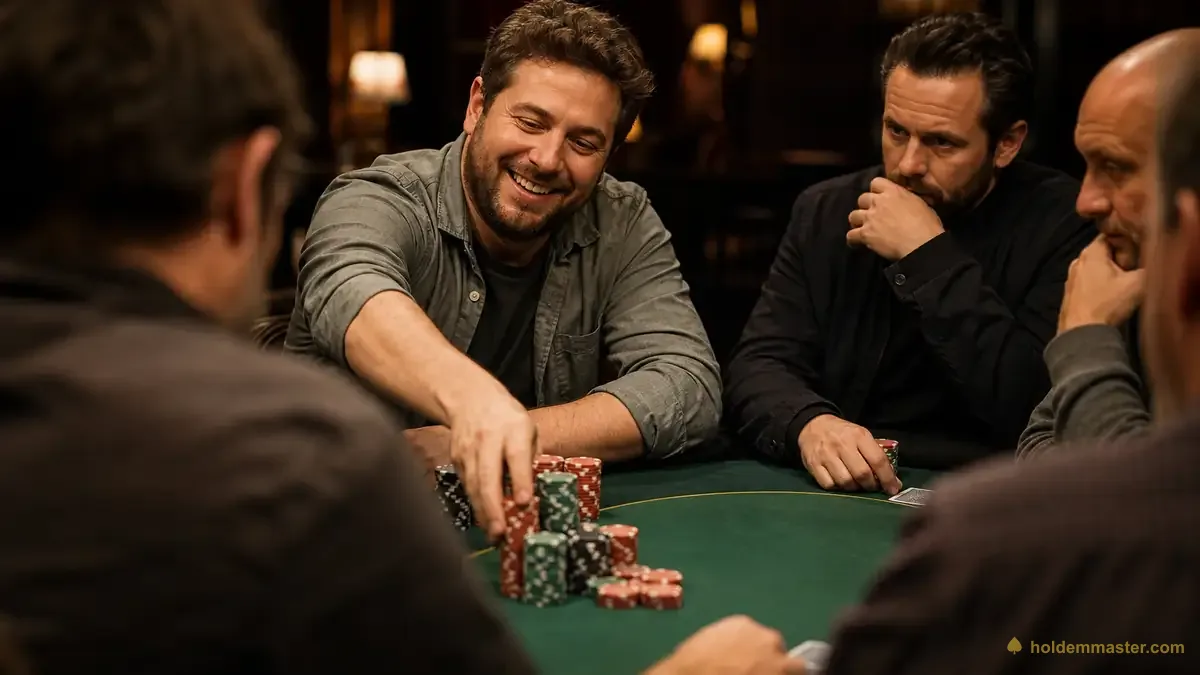
A fish is the weak player the whole table profits from. How to spot one, the shark/whale/nit/donkey slang decoded, and how to make sure the fish isn't you.
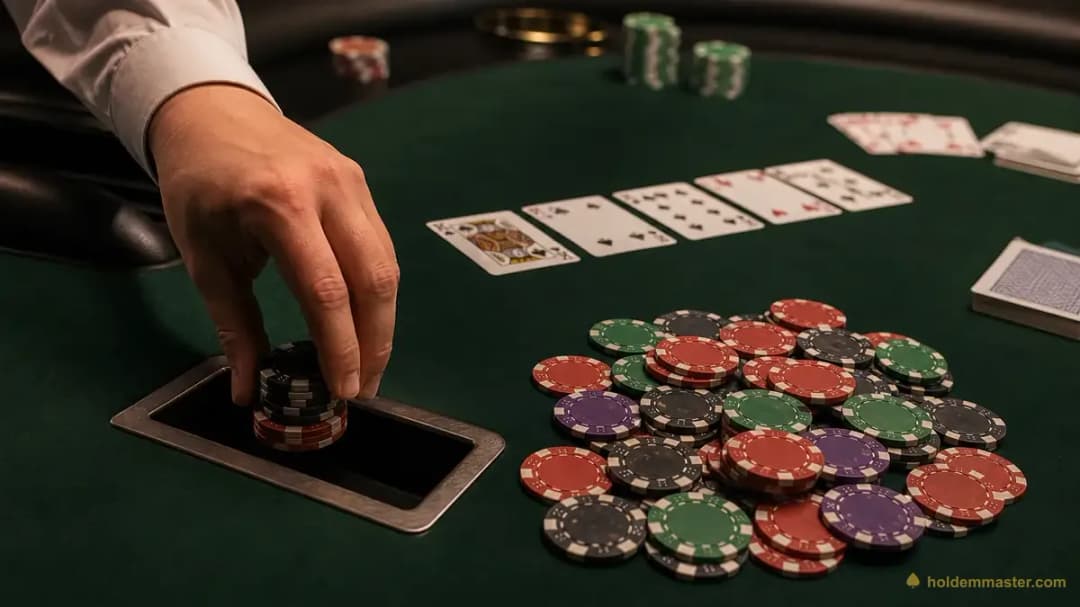
Rake is the fee the house takes from every cash-game pot. How pot rake, time charges and tournament fees work, what you really pay, and what rakeback returns.
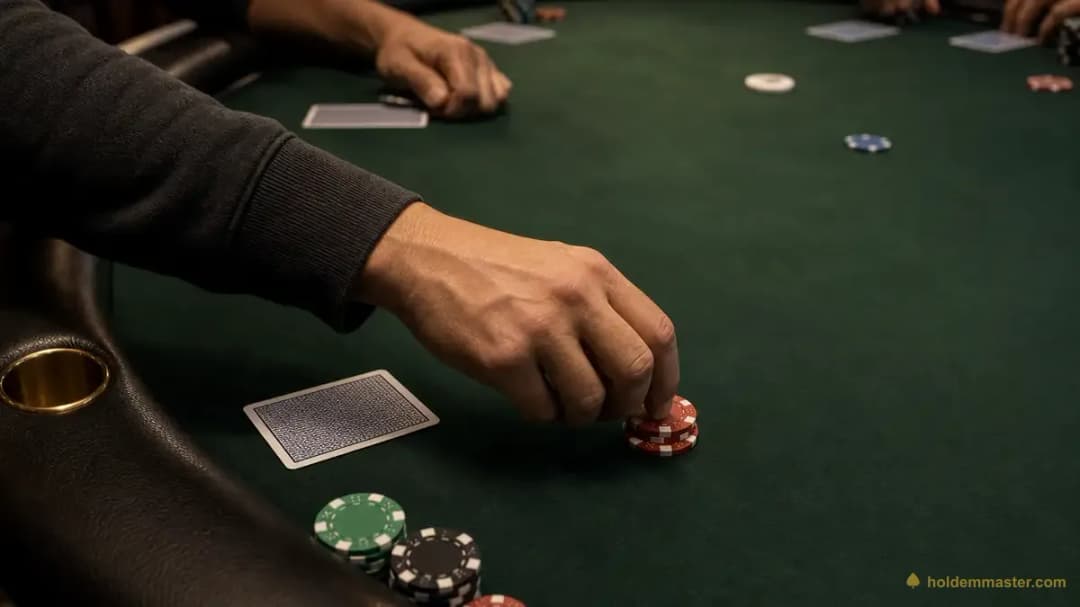
A straddle is a voluntary blind that doubles the stakes before cards are dealt. The rules, every straddle type, who acts first, and whether it's profitable.
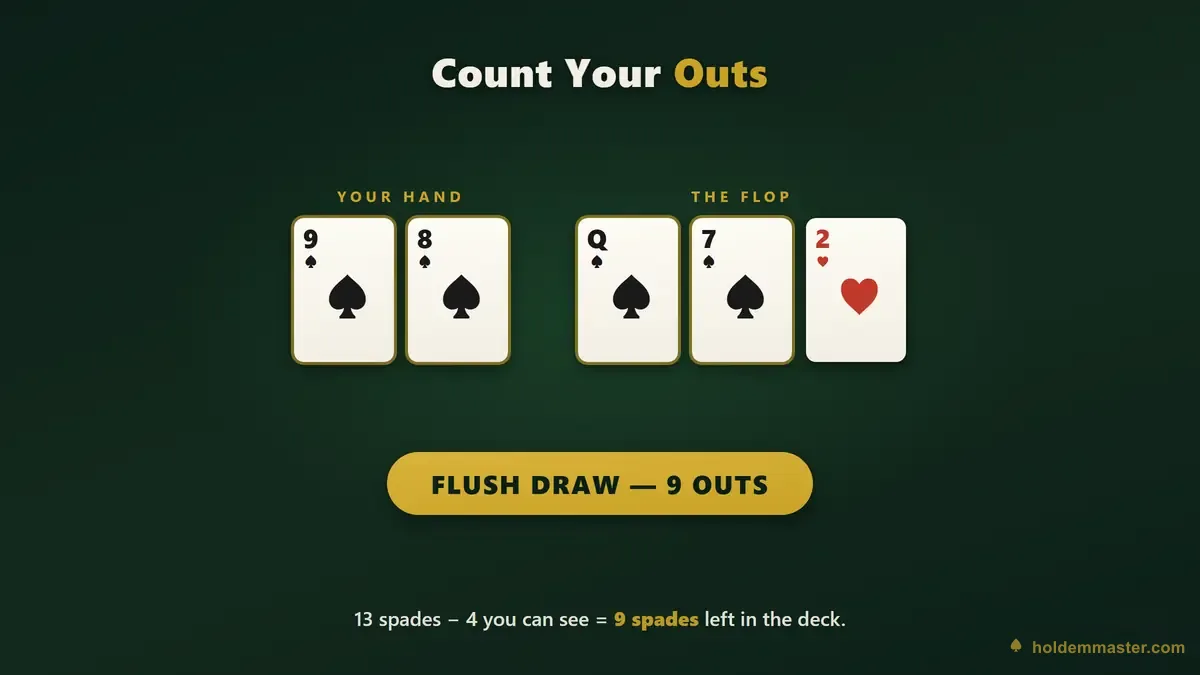
Blackjack-style card counting is dead in poker — but poker has its own. Why it doesn't transfer, whether it's legal, and how outs and blockers replace it.
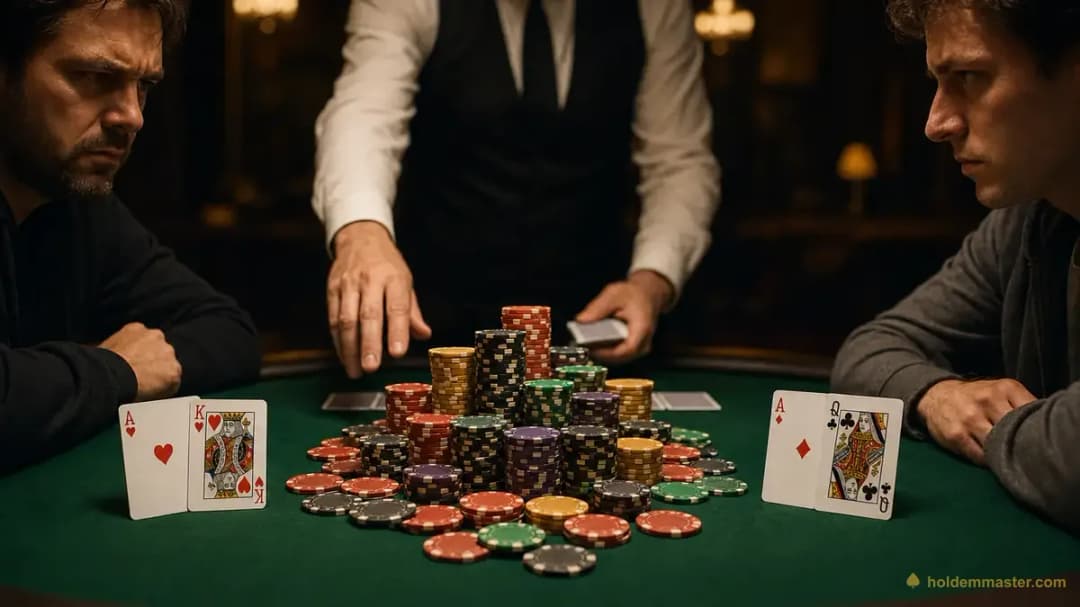
Equity is your share of the pot — but you don't always keep it. Why 40% equity isn't 40% of wins, plus fold equity, realization, and all-in equity explained.

Your pot odds say fold, but the call still prints. How implied odds work — the formula, set mining, reverse implied odds, and when the money isn't there.
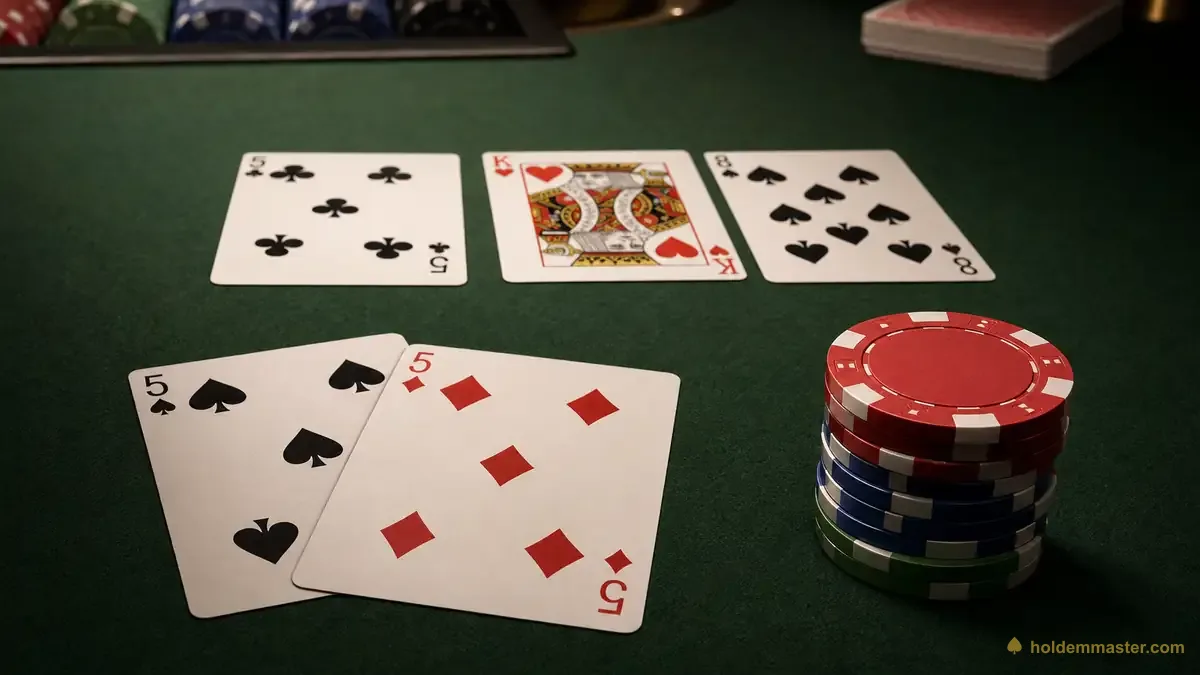
The real odds of flopping a set, a flush, quads and every draw in Hold'em — with the actual combinatorics and the set-mining math the top pages leave out.
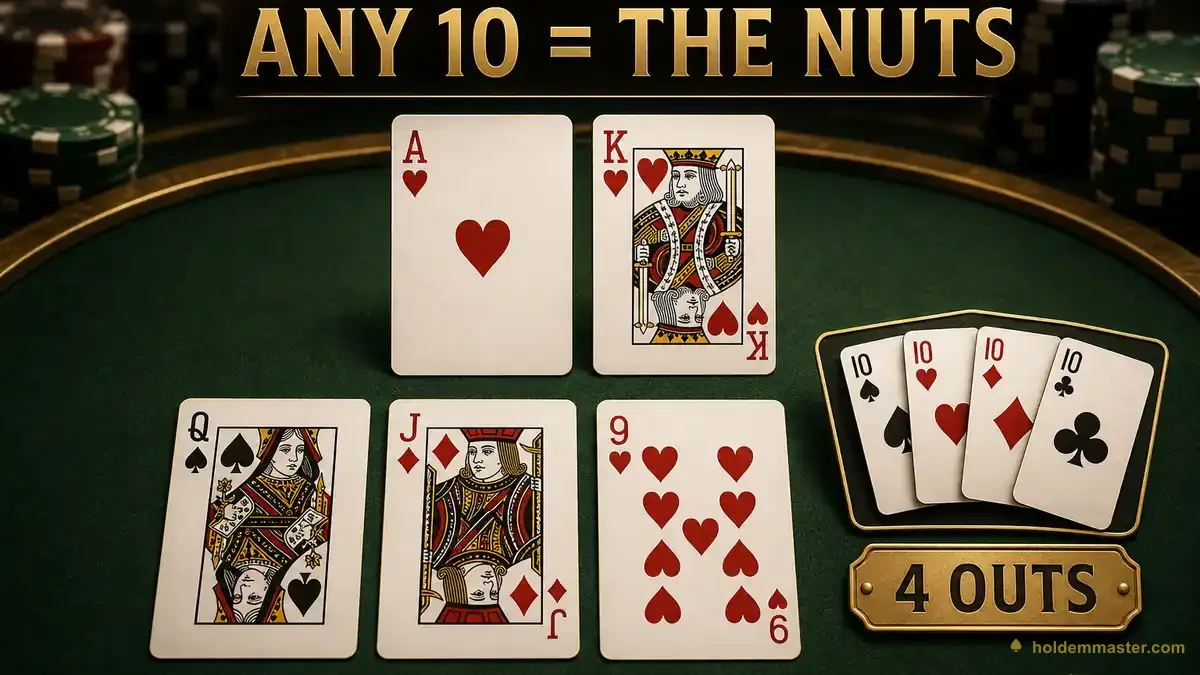
Counting outs is the skill nobody teaches first. Learn to count outs fast — a draw-by-draw outs chart, the outs-to-odds table, and the dirty outs that cost you.
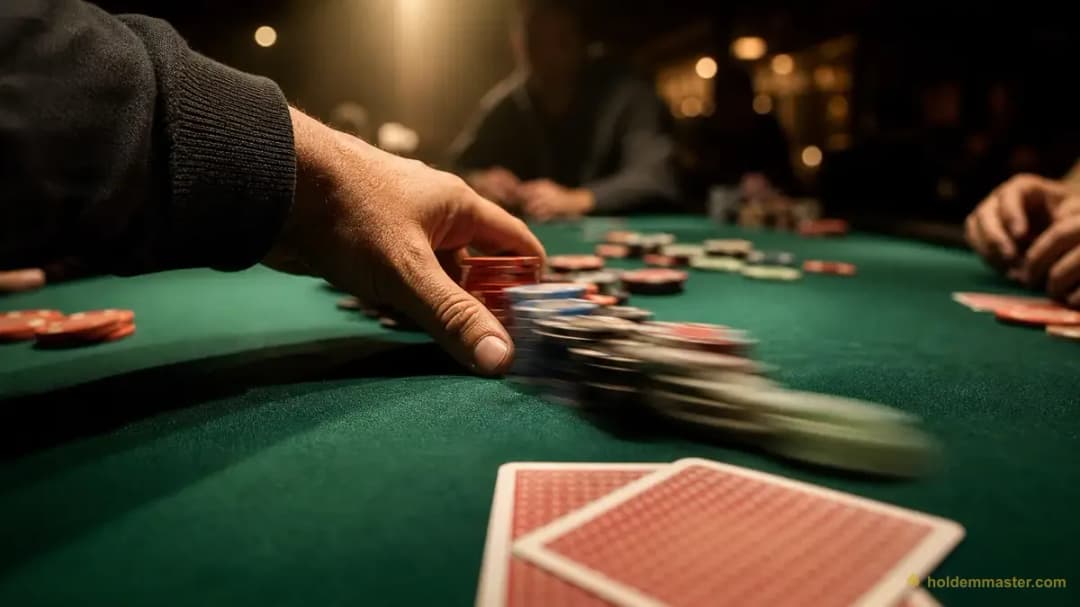
Stop calling on hope. How to calculate pot odds in ten seconds — the ratio-to-percentage shortcut, a bet-size cheat sheet, and where implied odds fit in.
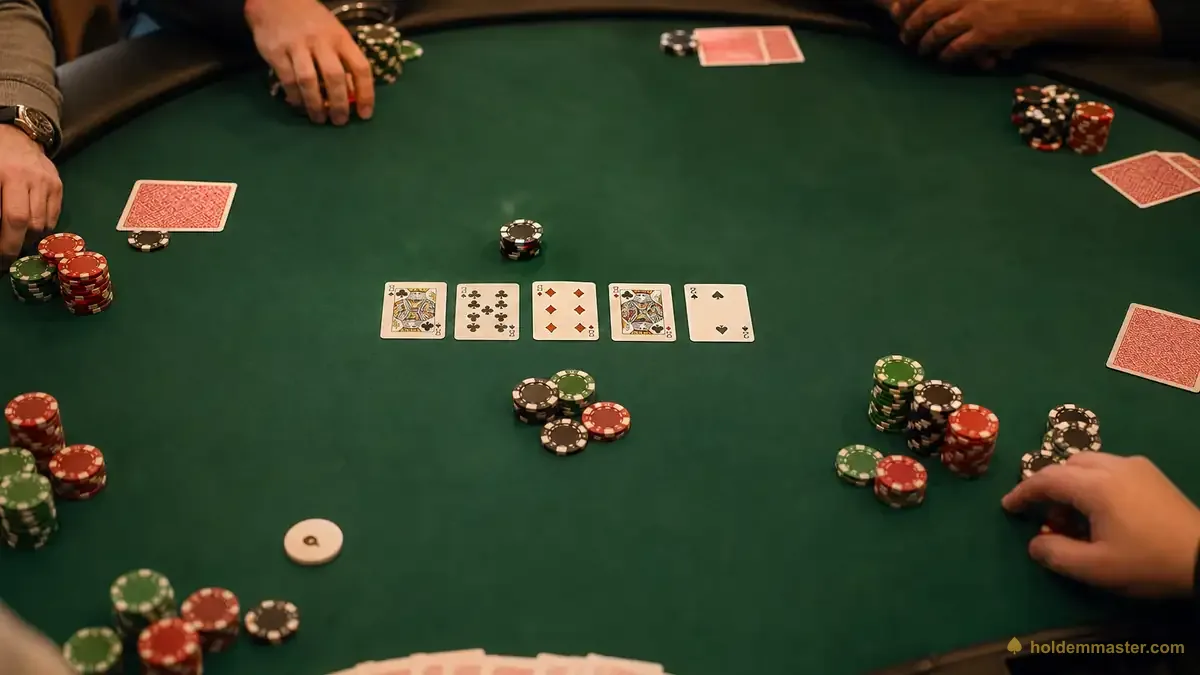
The real odds of every poker hand, flop, and draw in Texas Hold'em — plus the Rule of 2 and 4 and pot odds made simple, in one complete probability chart.

JTBC Seoul (Nov 1) is the only 2026 marathon that may still take foreign entries — Chuncheon and Garmin are full. Race calendar, fees, and Paradise City poker.

APT Incheon 2026 is in the books — Hong Kong's Stephen Pang topped a record 1,393-entry Main Event for KRW 411,180,000 (~$293,700). Full results + Korea guide.
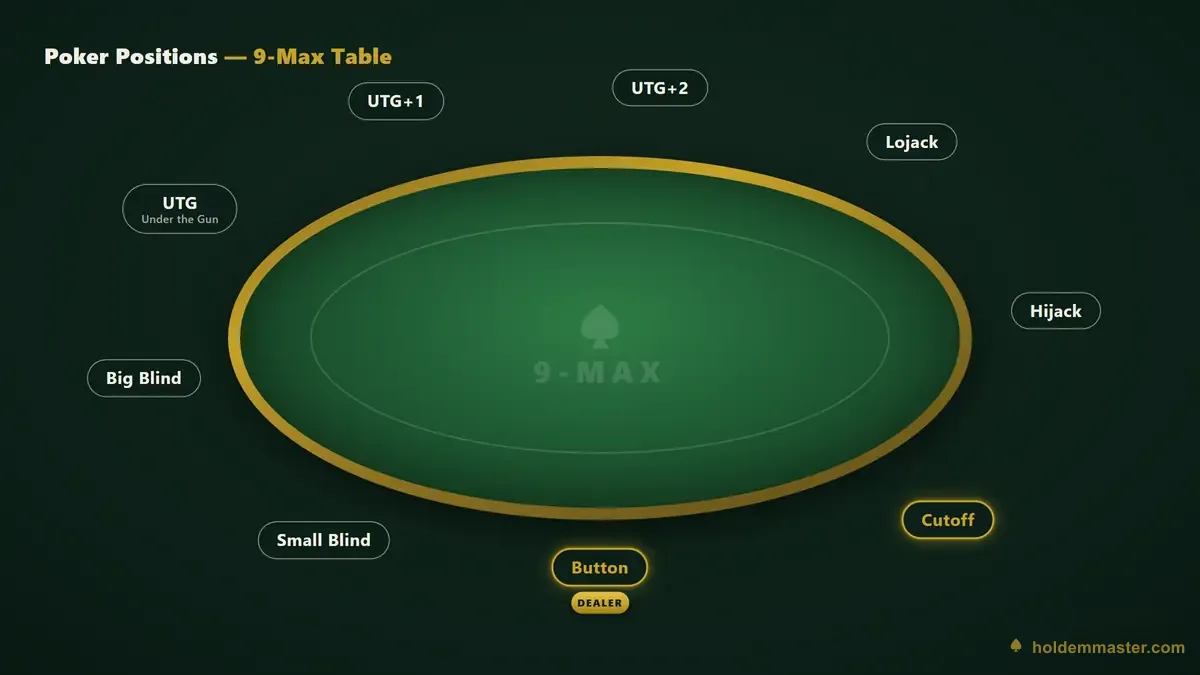
Two players, same cards, opposite results — the seat did it. In position vs out of position, why position matters, and opening ranges from UTG to the button.

WPT Australia 2026 — Sep 10–30, The Star Sydney. AUD $1,500 Prime + AUD $5,000 Championship. Satellites from AUD $270. Real trip costs rivals don't publish.

Manuel Ferrari won the 2026 Main Event for €1,002,488 from 1,823 entries. Full final table, plus the $0.50 Power Path playbook for EPT Barcelona 2027.
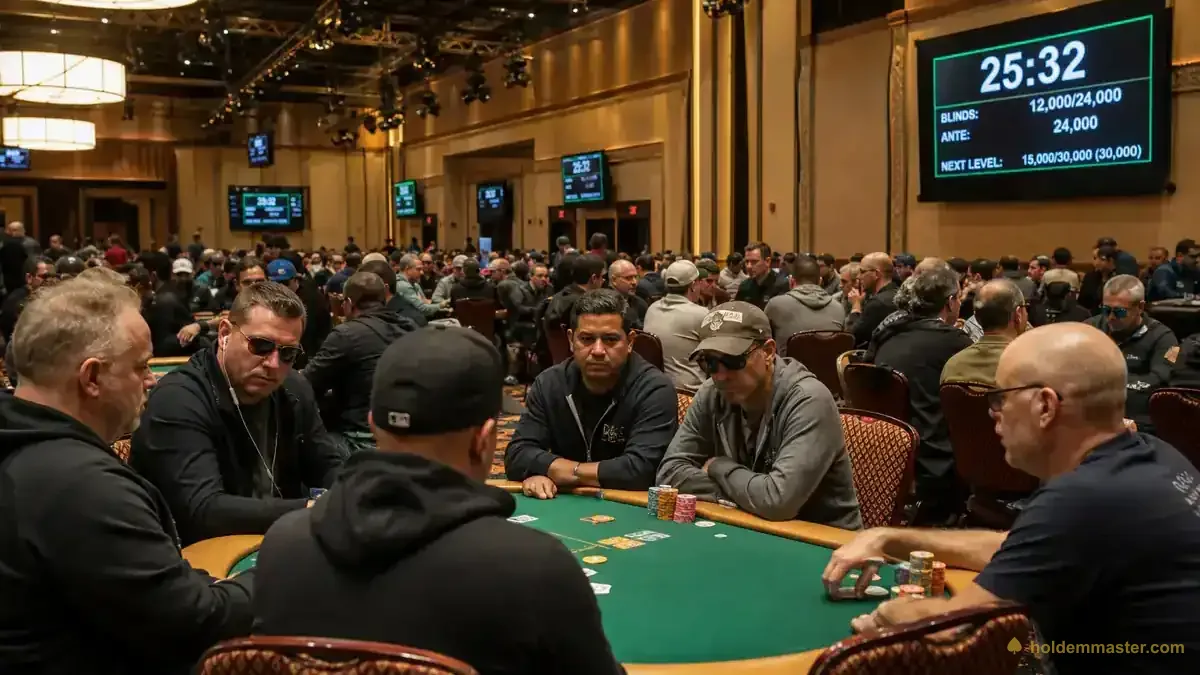
How do poker tournaments work? Buy-ins, blind structure, payout structure, freezeout vs PKO vs satellite formats, and a first-timer Day-1 checklist.
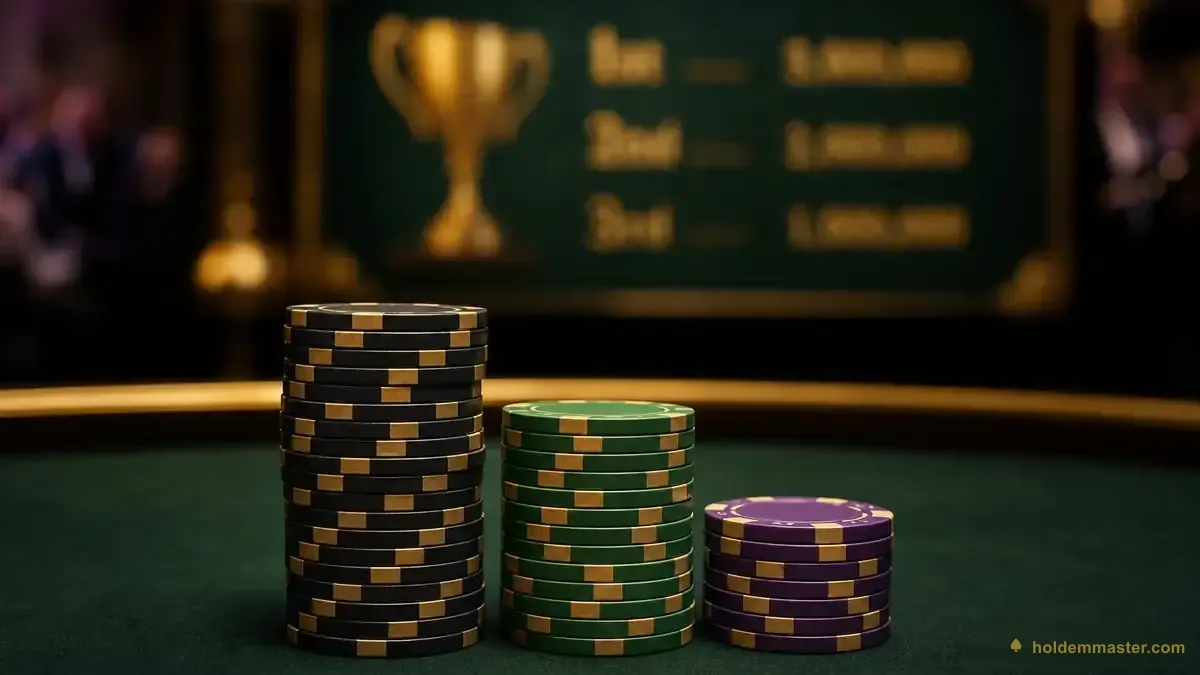
In a tournament your chips aren't cash — winning only pays first. ICM (the Independent Chip Model) turns your stack into real prize money. Here's how it works.
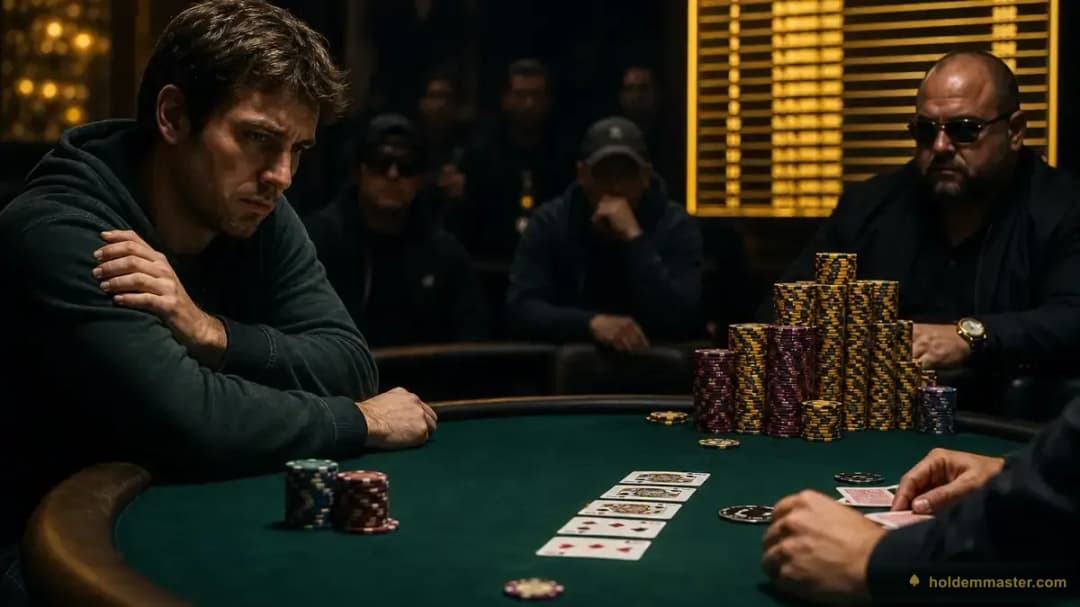
On the bubble, survival beats chips — so the right play flips. How to play a big, medium, or short stack, plus bubble factor, satellites, and hand-for-hand.
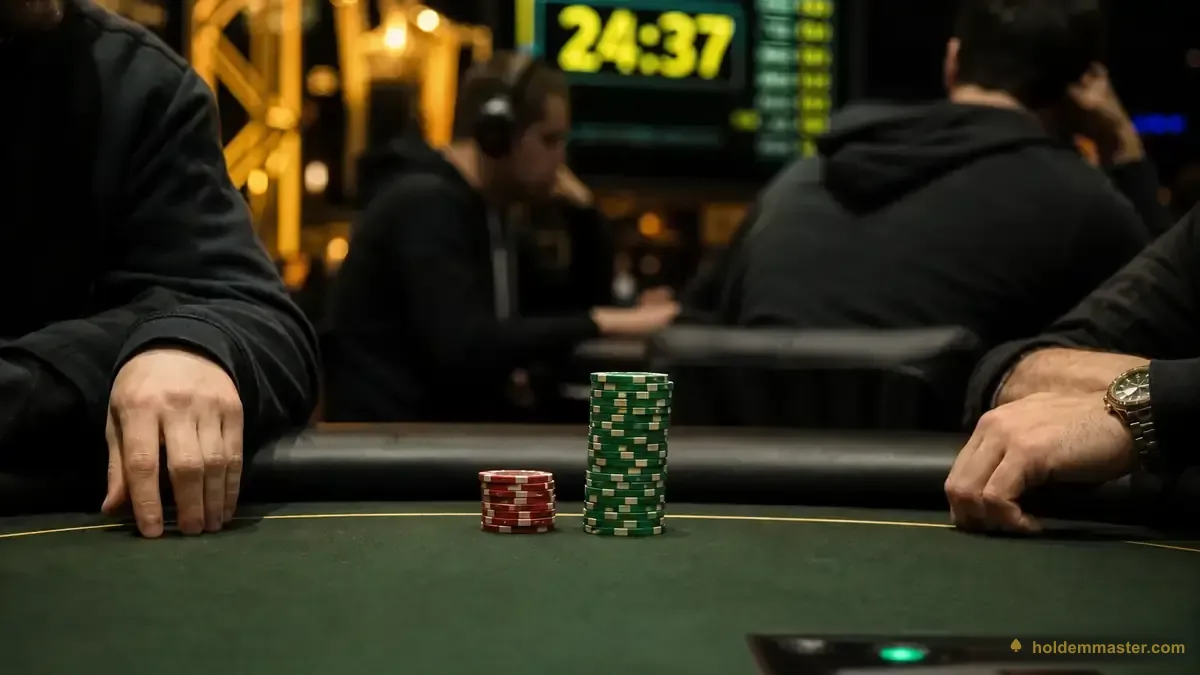
Short-stacked in a tournament? Learn push/fold by stack depth — when to jam at 15, 10, and 5 big blinds, the M-ratio zones, and the ICM twist on the bubble.
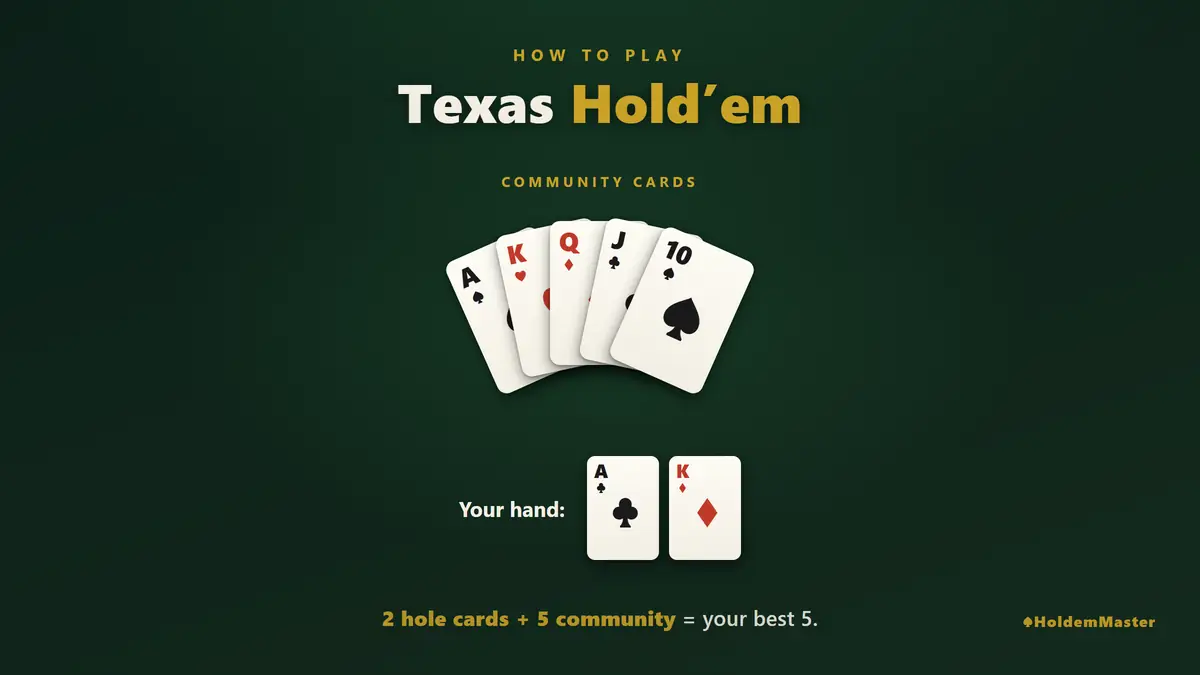
Never played before? How to play Texas Hold'em step by step — blinds, chip setup, hand rankings, and a printable cheat sheet even dummies can follow.
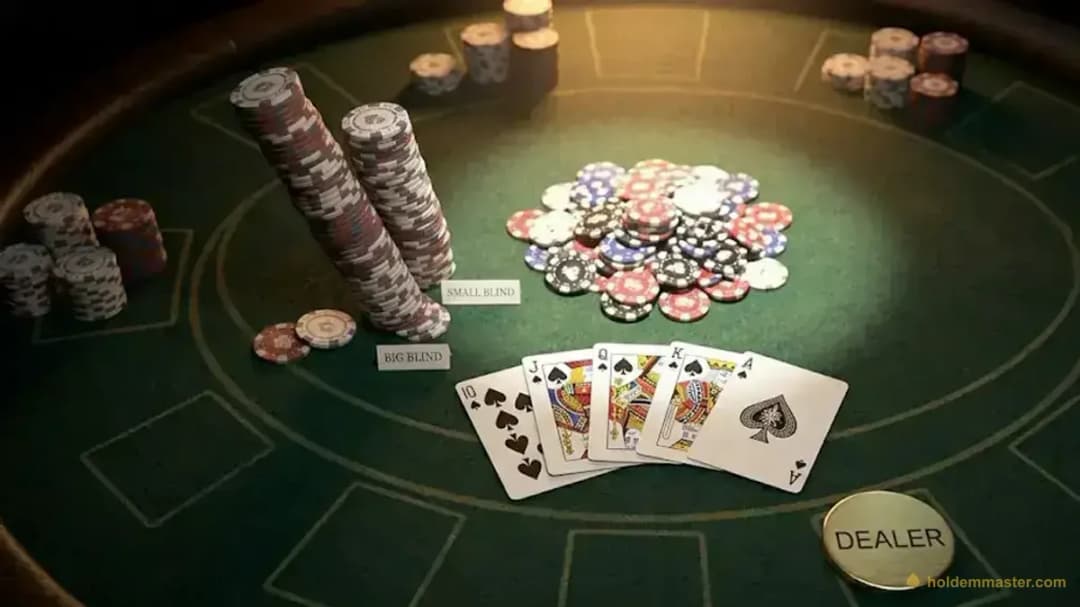
Flopped a flush and still lost the pot? Here are all 10 poker hand rankings best to worst, the real odds behind each, and how kickers and ties decide it.
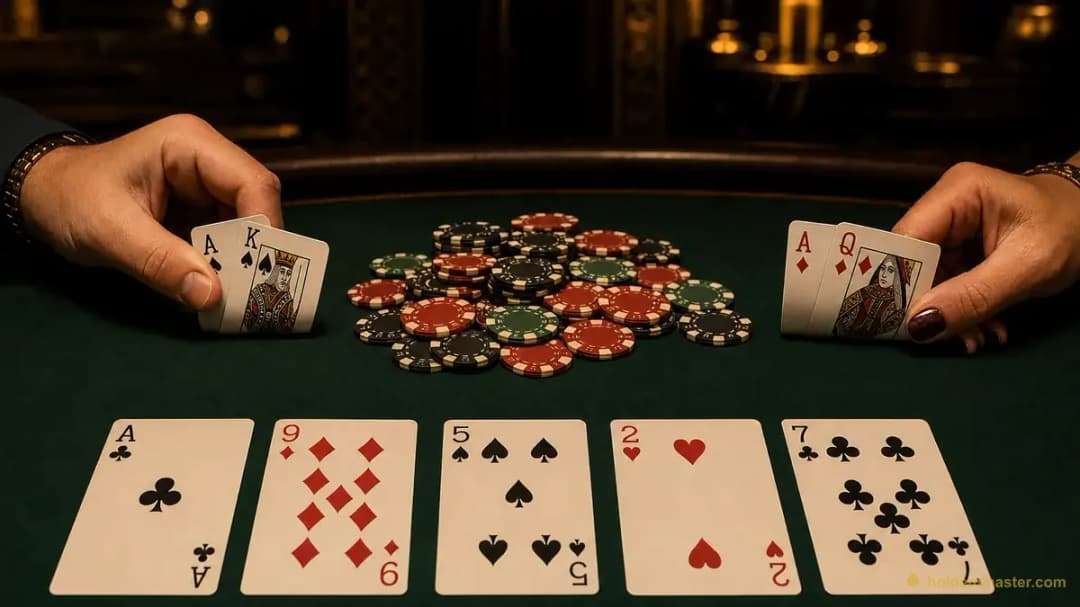
A kicker is the side card that breaks ties in poker — which hands have one and how many, why A9 loses to AK, and the quads exception most guides get wrong.
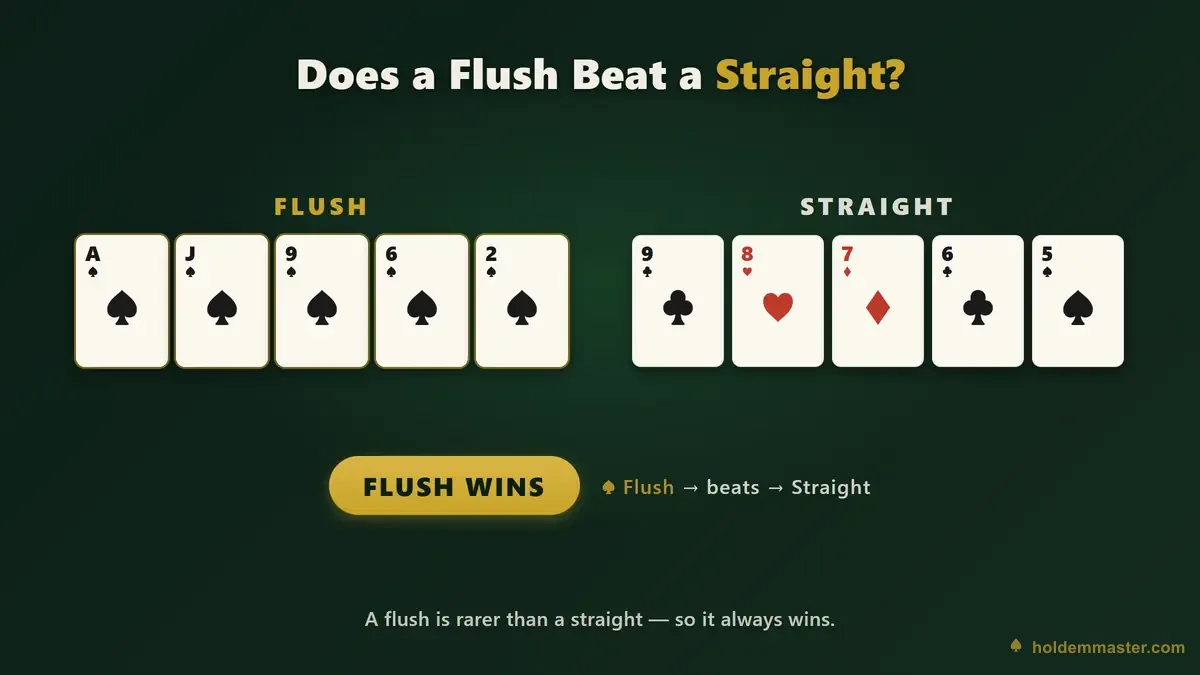
Slid a straight forward — and a flush took the pot? A flush always beats a straight. Here's the math, what beats a flush, and 3 boards that fool players.
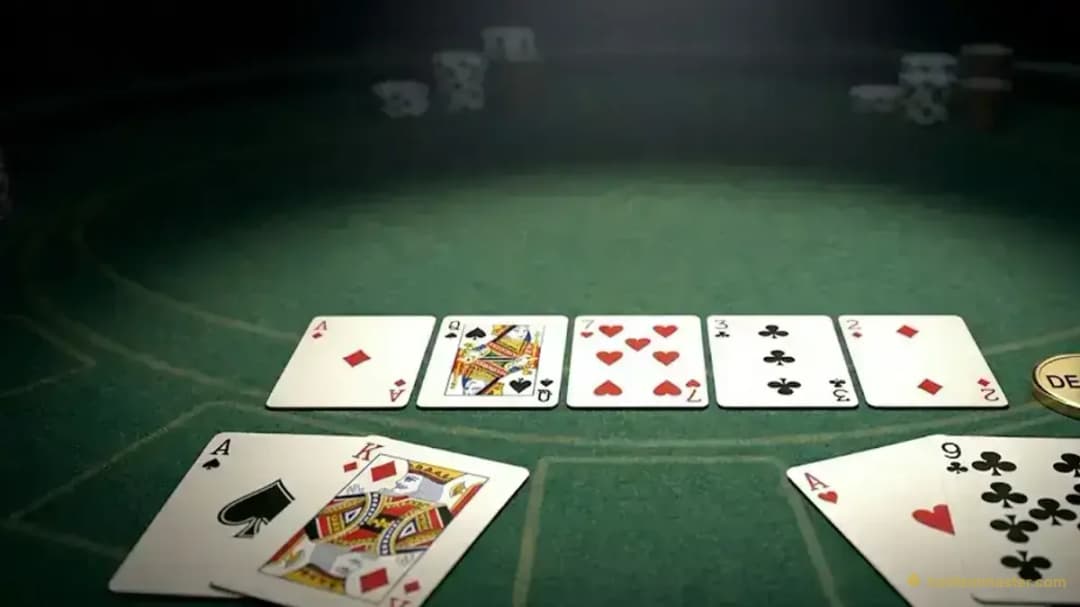
Same pair at showdown and still lost? How ties are broken in poker — who wins with the same pair or two pair, when the 5th card matters, and when pots split.
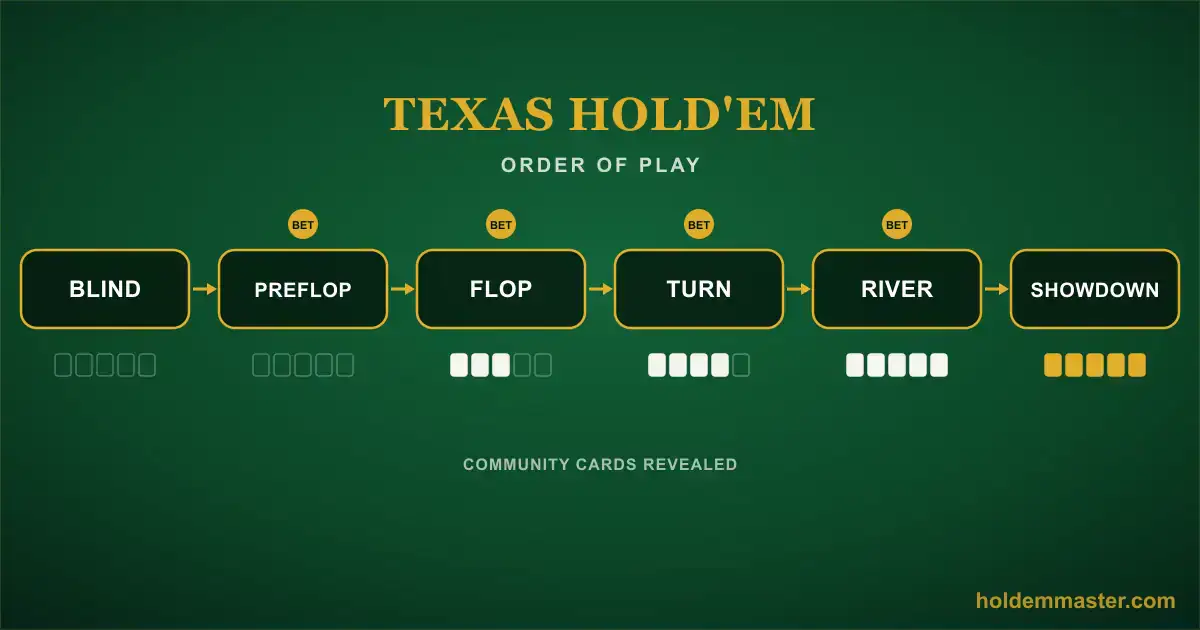
Whose turn is it — and who bets first? The full Texas Hold'em order of play: blinds, preflop, flop, turn, river, showdown, and who acts first on every street.
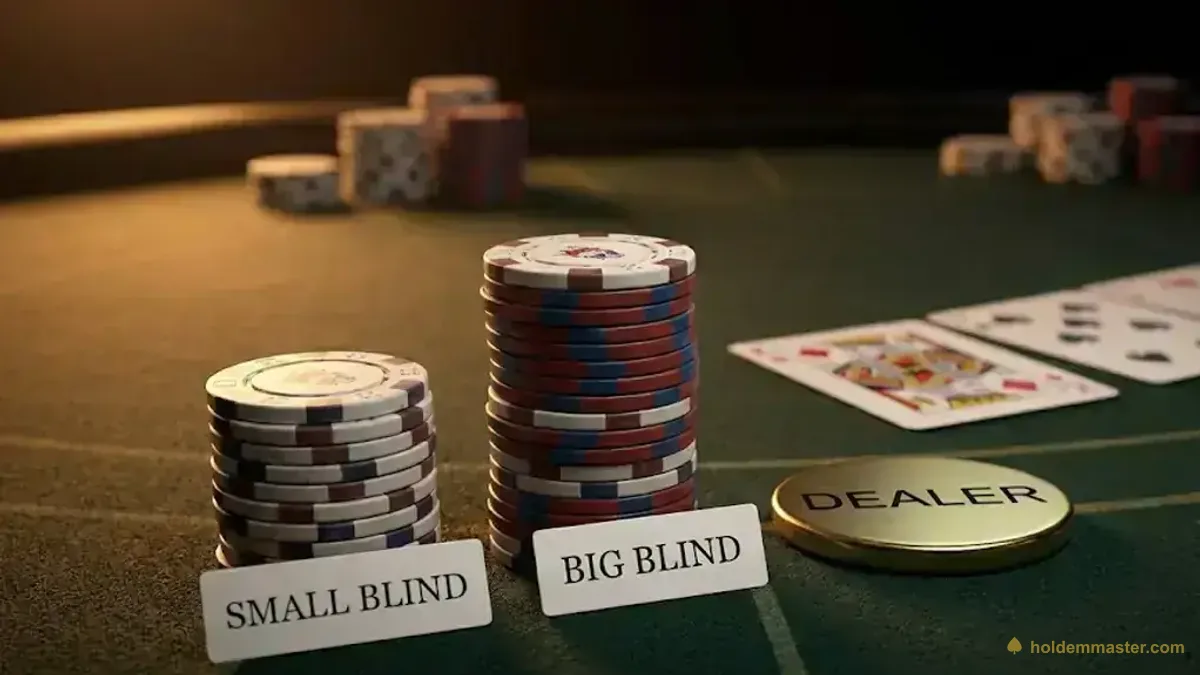
Two players pay before a card is dealt — why? What the small blind and big blind are, who posts them, SB vs BB amounts, the big blind ante, and heads-up rules.
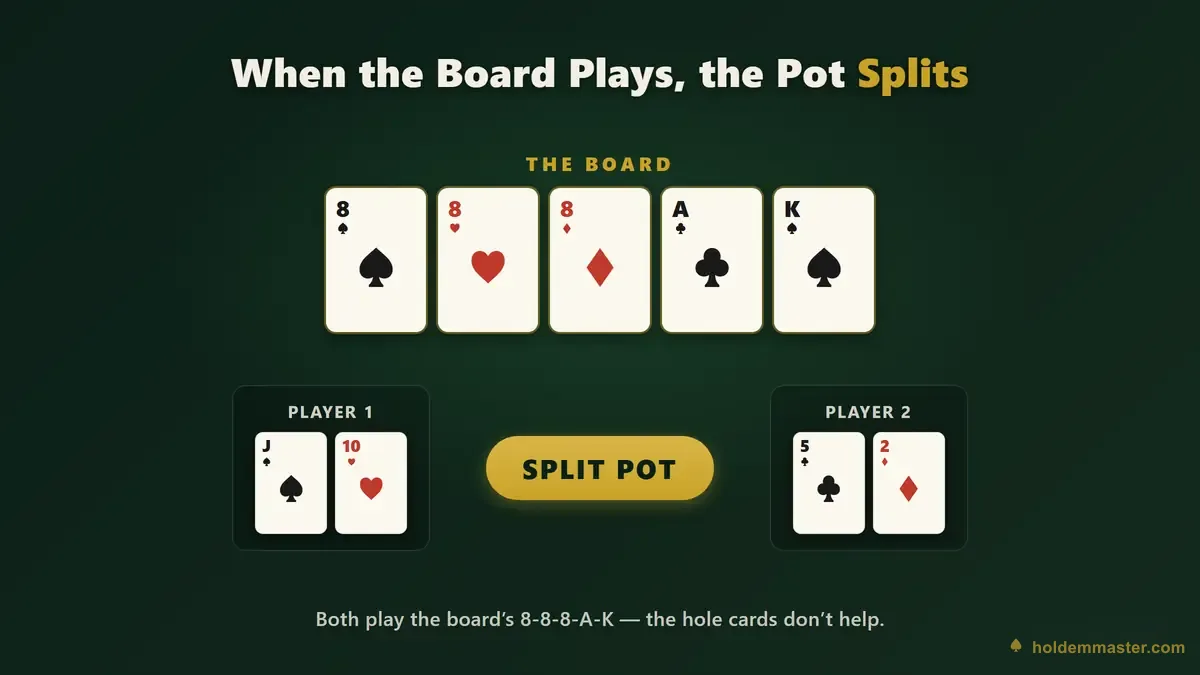
Can you tie in poker? Yes — here's exactly when pots split: identical five-card hands, the board playing for everyone, the odd chip rule, and side-pot chops.
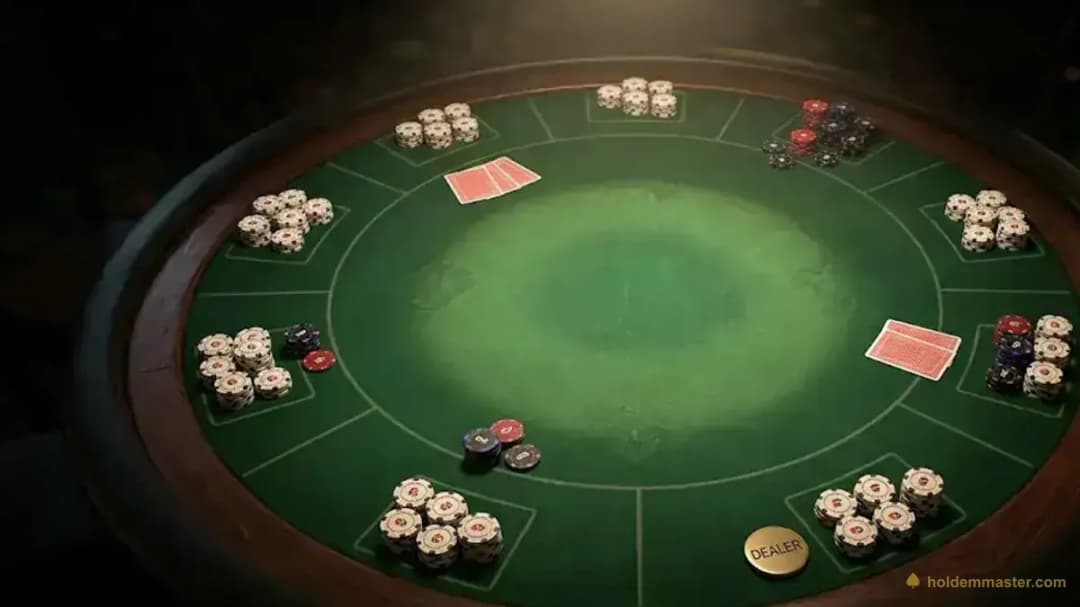
The names move with the button, not the chairs. Every poker position name — UTG, hijack, cutoff, button — plus seat numbers, 6-max map, and who acts first.
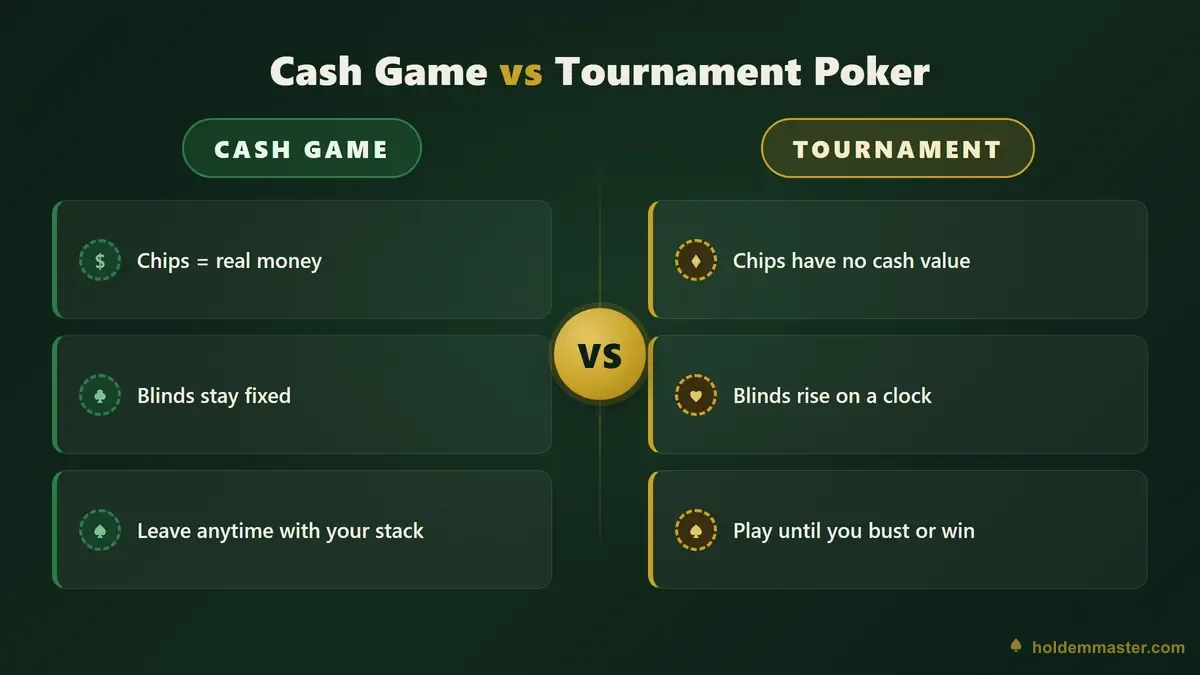
Cash game vs tournament poker — which fits you? Chip value, rising blinds, ICM, bankroll, which is harder and more profitable, and where beginners start.
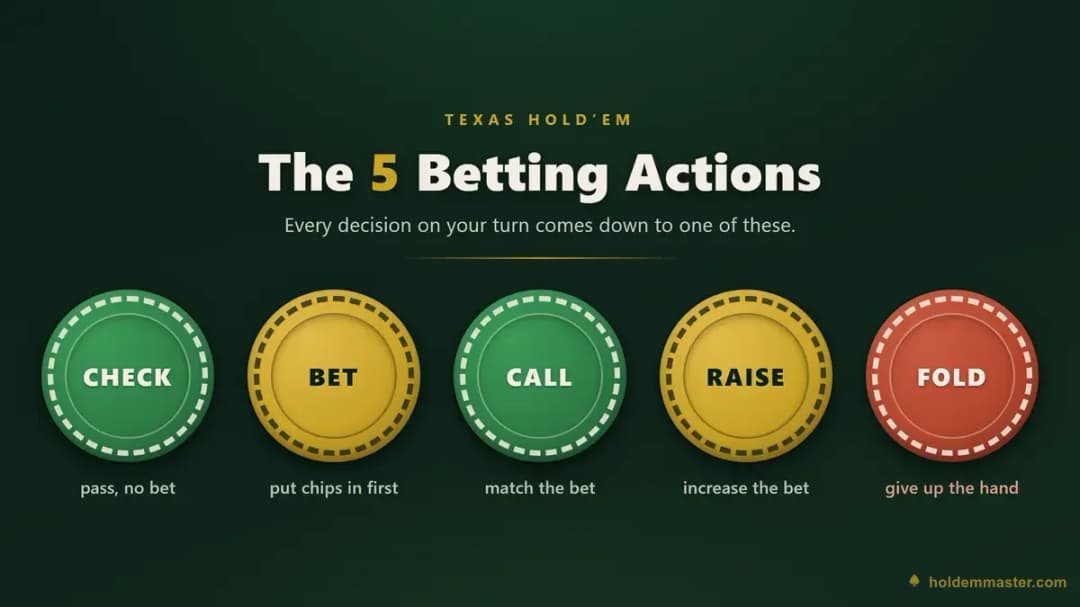
Action's on you and your mind goes blank? Learn what a check, call, raise and fold mean in poker, the min-raise rule, and how many times you can re-raise.
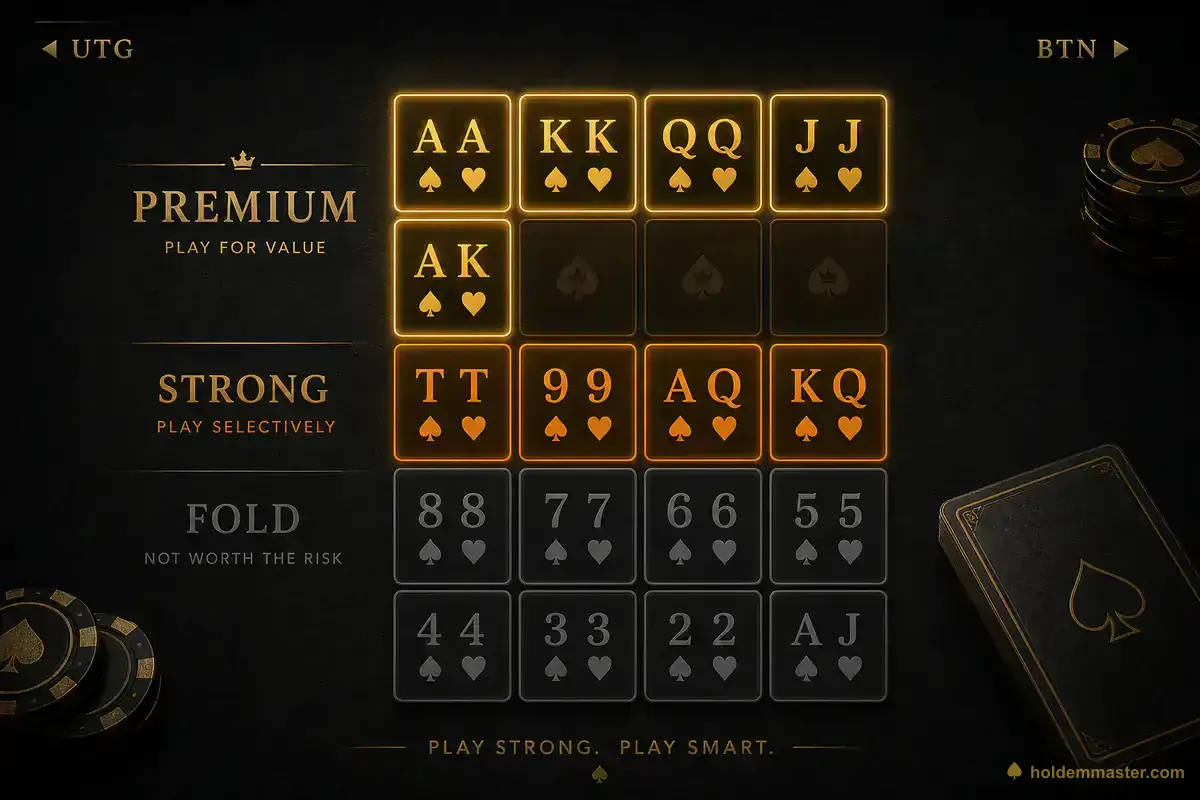
Most hole cards lose money. The best and good starting hands in poker, the full chart by position and 6-max, plus GTO vs beginner charts — in 10 minutes.
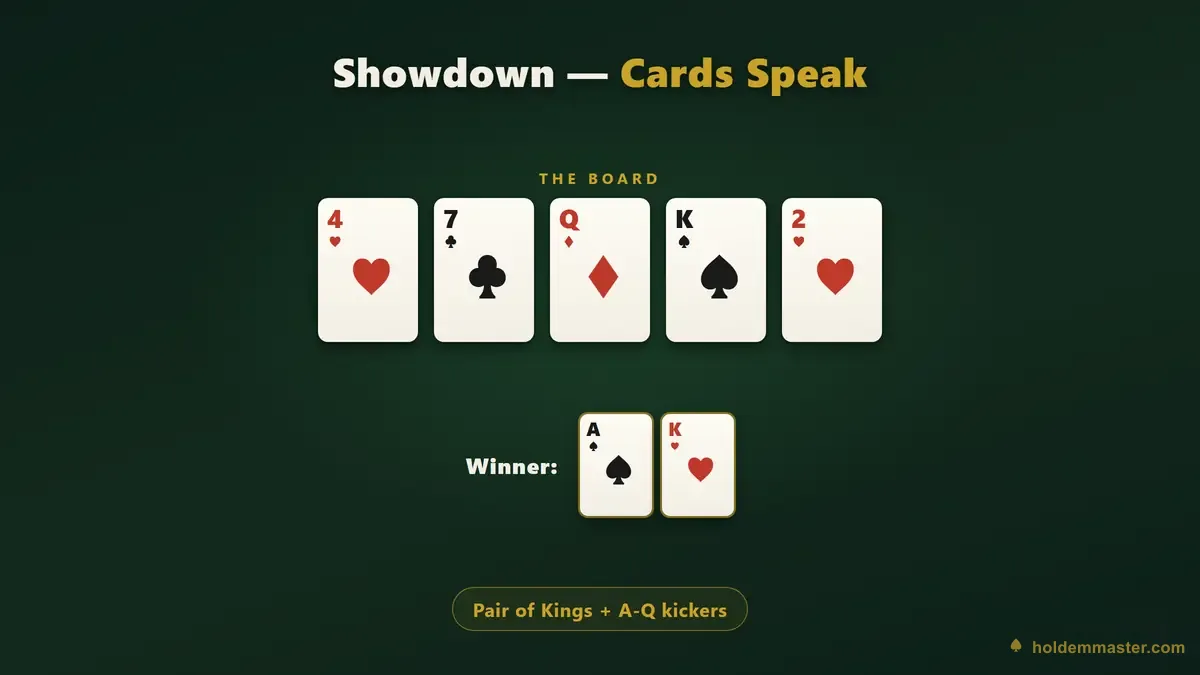
Who shows cards first at showdown? Can you muck without showing? Hold'em showdown rules — last aggressor, cards speak, slow roll, and all-in rules explained.
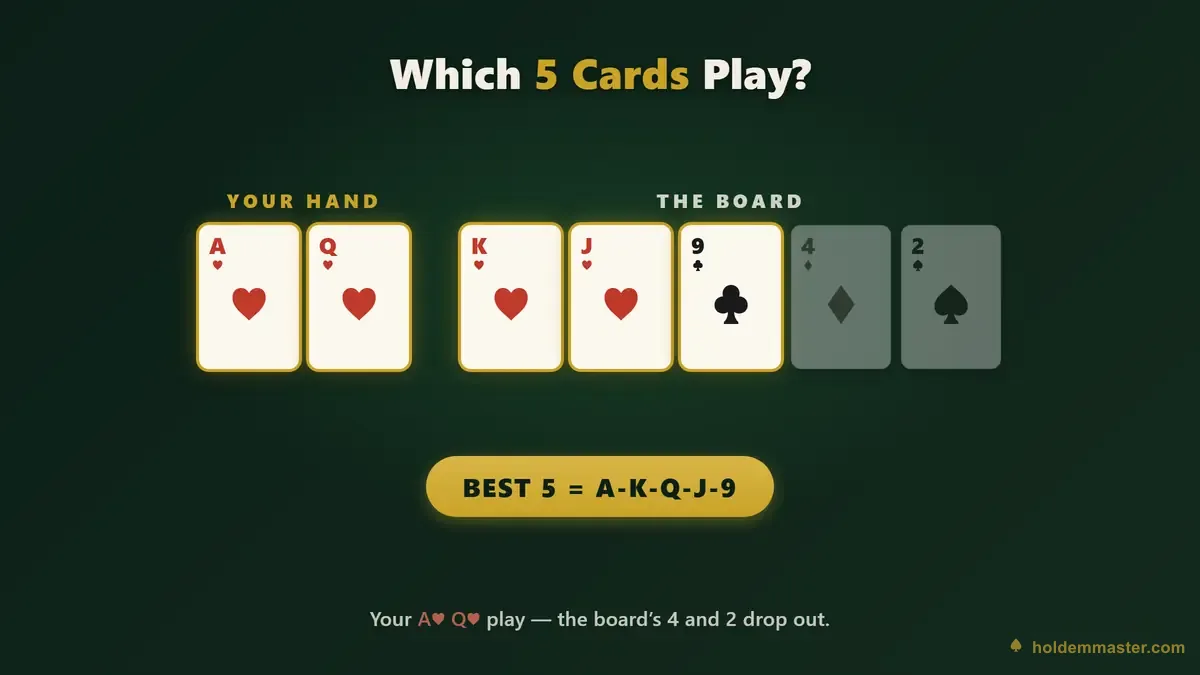
River's out and you still can't tell what you have? Read any Hold'em board fast: your best 5 cards from 7, board straights and flushes, and playing the board.
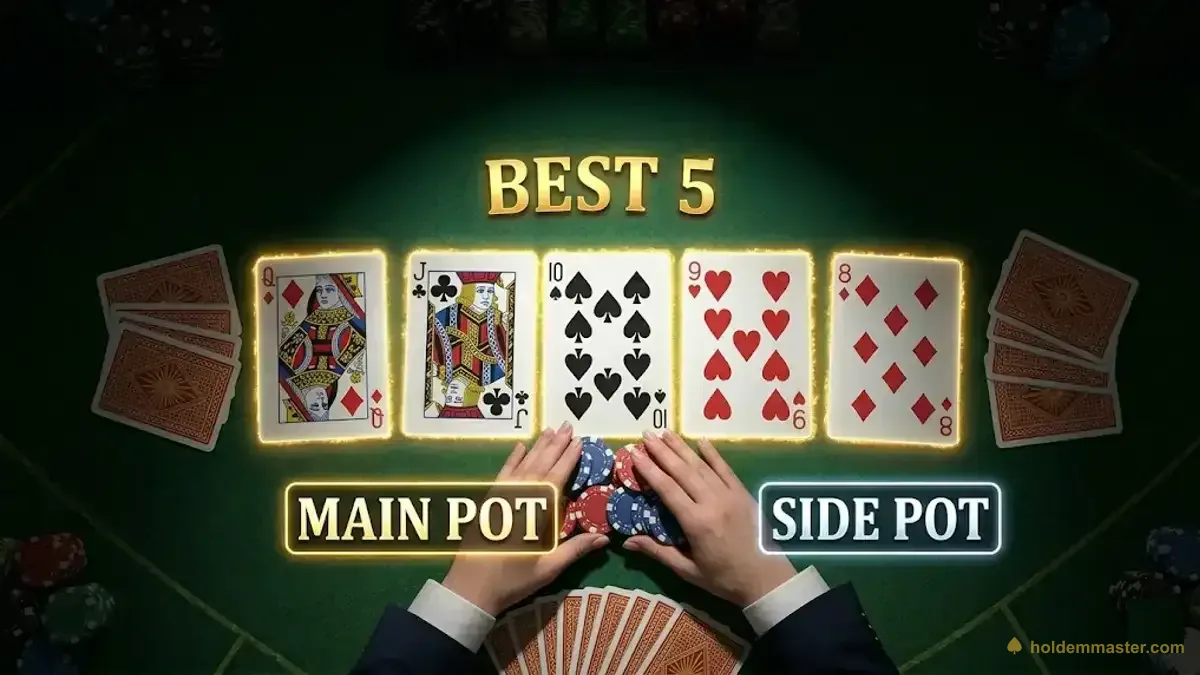
Shoved all your chips and not sure what you can win? Texas Hold'em all-in rules — table stakes, side pots, re-raise eligibility, and showdown order.