
When I started playing, I limped into almost every pot. It felt safe — I got to see a flop cheaply, I wasn't risking much, and I "kept my options open." What I didn't realize was that every seasoned player at the table had me pegged the moment I did it. Limping is the clearest tell in low-stakes poker that someone doesn't fully know what they're doing — and for two years, that someone was me.
A limp is when you enter a pot before the flop by just calling the big blind, instead of raising or folding. It sounds harmless, and occasionally it's fine — but open-limping as the first player in is one of the most common and costly habits in the game. Below is exactly what limping is, why it usually loses money, the specific spots where it's actually correct (it's not always wrong), and how strong players turn your limp into their profit. Getting this one concept right is a bigger leap than most players realize — it's decision three of a winning  Texas Hold'em strategy, right after choosing your seat and your starting hand.
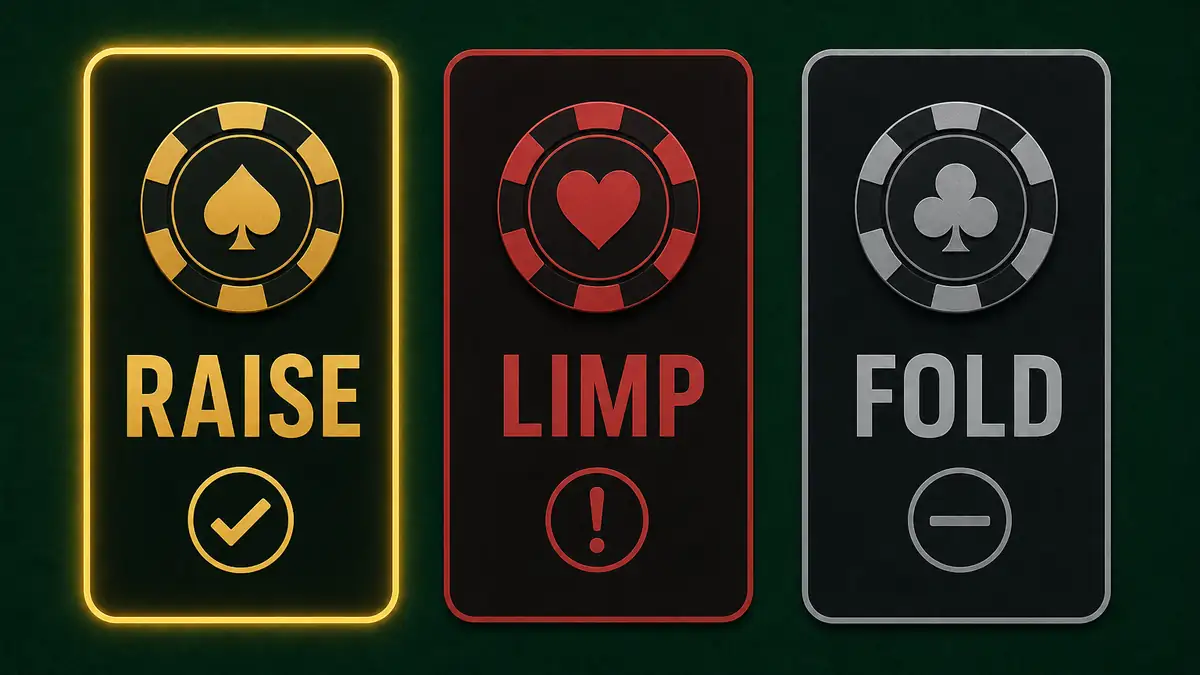
Limping, at a glance
What Does "Limping" Mean in Poker?
To limp is to enter the pot preflop by calling the exact amount of the big blind — no raise. You're putting in the minimum to see a flop. Crucially, limping only applies when nobody has raised yet: if someone has already raised and you match it, that's a call, not a limp. The word specifically describes taking the passive, cheapest route into an unraised pot.
It's worth separating two terms people blur together. A limper is someone who enters unraised pots by calling the big blind. A calling station is a player who calls too much and rarely raises or folds — a habit that shows most on the flop, turn, and river. They often describe the same loose-passive player, but they stress different habits — one is about how you enter pots, the other mostly about how you continue in them. This glossary of poker terms sorts out the rest of the vocabulary if any of it trips you up.
Open-Limp vs Over-Limp: Not the Same Thing
Before we judge limping, split it in two — because one version is far worse than the other:
| Open-limp | Over-limp (limp behind) | |
|---|---|---|
| When | You're the first player to enter the pot | You call after someone has already limped |
| The problem | You could have raised to win it now — and didn't | Less bad: you're getting a discount into a multiway pot |
| Verdict | Almost always a mistake | Situationally fine with the right hands |
This distinction matters because most of the "limping is terrible" advice is really about open-limping — being the first one in and choosing to just call. Over-limping behind other players is a genuinely different, and often defensible, decision. Keep them separate and the whole topic gets clearer.
Why Limping Is Usually a Mistake (4 Reasons)
When you open-limp, you give up a surprising amount. Here's exactly what:
1. A limp can't win the blinds uncontested. This is the big one. When you raise first-in, everyone can fold and you scoop the blinds uncontested — free money, a meaningful chunk of the time. When you limp, that number is zero. You've guaranteed you have to make a hand or win it later; you've thrown away the cleanest way to win. 2. You surrender initiative. The preflop raiser is the "aggressor" — they get to fire a continuation bet on the flop and represent a strong hand, often taking the pot with nothing. Limp, and you've handed that story to someone else. You're now reacting instead of leading. 3. You build a bloated, multiway pot — often out of position. Limping invites more callers and lets the big blind in cheaply. The more players see the flop, the less your hand is worth, and if you limped from early position you'll be out of position to almost the whole field on every street, with no initiative. That's the worst seat in the house. 4. You make yourself readable — and exploitable. Habitual limpers show up with a capped, transparent range. Good players attack it relentlessly (more on that below), so you end up in tricky spots out of position over and over. As the old saying goes, chronic limpers "win small pots and lose big ones."
Why Raising First-In Beats Limping
The whole case for raising instead of limping comes down to one asymmetry: a raise can win the pot right now; a limp never can. When you open-raise, you're giving yourself two ways to win — everyone folds preflop, or you take it later with the initiative of the aggressor. Limping leaves you only the second, harder path, and strips away the fold equity that makes preflop aggression profitable.
There's a second, quieter benefit: raising denies equity to the blinds. If you limp, the big blind gets to see the flop cheaply with whatever random hand they were dealt, and sometimes it cracks you. A raise charges them to continue and often folds them out entirely, so their junk never gets the chance to outdraw you. That's why "raise or fold" is the default a strong player lives by — and why entering with a raise pairs so naturally with a disciplined starting-hand range.
So When Is Limping Actually OK?
Here's where the dogma goes too far. Limping is not always wrong — the honest, modern answer is that open-limping first-in is almost always a mistake, but several specific spots are legitimate exceptions:

| Spot | Why limping is fine here |
|---|---|
| Completing the small blind (unraised pot) | Nobody has raised, your money's usually half-in and only the big blind acts behind you — the raise-or-fold rule breaks down at a discount. Facing a raise it's a different question: by default, 3-bet or fold. |
| Over-limping speculative hands | Behind other limpers with small pairs or suited connectors, you get great odds to flop a monster in a multiway pot. |
| Very passive live low-stakes | If opponents only raise monsters and never punish limpers, you can see cheap flops with speculative hands and realize equity. |
| Short-stacked late position (tournaments) | At short tournament stacks — well under the 100bb of a standard cash game — modern solvers develop button open-limping ranges, where a raise gains little and limping cuts your cost. |
The most useful of these for everyday play is over-limping small pocket pairs. Pocket deuces through, say, sevens flop a set only about 11.8% of the time (roughly 1 in 8.5), so on their own they're not worth building a big pot with. But limping in behind other limpers for a cheap price, in a multiway pot where you'll get paid off when you do hit, turns implied odds in your favor. You're set-mining — and that's a legitimate reason to limp along. Just note the ground is shifting under the "never limp" mantra: solver work in 2026 has quietly rehabilitated limping in a handful of shallow and multiway spots. It's nuance, not a license to open-limp your whole range.
What Is a Limp-Reraise?
A limp-reraise (or limp-raise) is a trap: you limp, wait for an opponent to raise behind you, and then re-raise them. Done with a monster like aces or kings at an aggressive table, it can build a big pot and look deceptively weak.
The catch is that it's become transparent. Because almost nobody limps intending to fold, a limp-reraise now screams a very narrow, very strong range — think TT+ and AK/AQ — to any thinking opponent. They simply fold everything but their own premiums, and your "trap" wins a tiny pot or gets away cheaply. It still has niche uses (short-stack tournament spots, exploiting a hyper-aggressive raiser), but as a default line against decent players it's more cute than profitable. Treat it as an occasional tool, not a go-to move.
Is Limping a "Fish" Tell? How Good Players Punish It
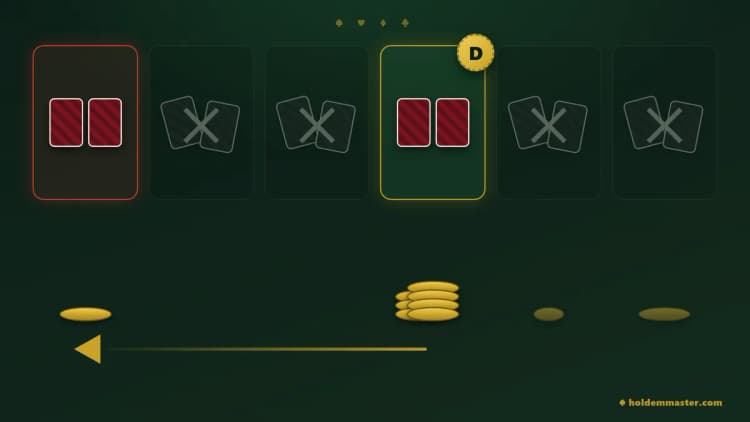
Yes — in most games, an open-limp is a flashing sign that says "weak, passive player here." And the reason it's such a costly habit is that skilled players don't just note it, they attack it:
- •The isolation raise. When a strong player sees you open-limp, they raise big behind you — an "iso-raise" — to fold everyone else out and get you heads-up, in position, with the betting lead. Now you're playing a bigger pot than you wanted, out of position, against someone who has you outgunned on every street.
- •Thin value and relentless c-bets. Against a capped limping range (few or no premium hands, since you'd usually raise those), good players bet more streets for thinner value and bluff more freely, confident you are unlikely to hold the strongest hands.
- •Position abuse. Because limpers are usually loose and passive, aggressive players simply out-play them after the flop, betting them off marginal hands and extracting value when they connect.
 fish.
fish.Limping in Live Low-Stakes vs Online / GTO
One honest caveat, because context changes everything. In online and tougher games, open-limping is close to indefensible — the fields are aggressive, someone will iso-raise you almost every time, and the GTO baseline is essentially "don't open-limp in a normal 100bb game" — outside the small blind, where completing stays defensible for the reasons above.
In very passive live low-stakes games, it's a different world. If the table routinely lets limpers see cheap flops and nobody punishes them, limping along with speculative hands costs far less — you're not being isolated, and you get to realize equity with hands that would rather not face a raise. It's still not optimal — and open-limping from early position stays the worst version of it — but the penalty is small, and set-mining in a family pot can print money. Read your table: the softer and more passive the game, the more limping you can get away with; the tougher the game, the more strictly you should raise or fold.

FAQ
The 3 Things to Remember
1. Limping is calling the big blind instead of raising — and open-limping, being first in, is almost always a mistake: a limp can't win the blinds uncontested, you give up initiative, and you mark yourself as an easy target. 2. But it's not always wrong. Completing the small blind, over-limping speculative hands behind other limpers, and passive live or short-stacked tournament spots are legitimate exceptions. The dogmatic "never limp" is an overstatement. 3. Default to raise-or-fold. Reserve limping for those specific spots, and you'll stop handing strong players free chances to isolate and exploit you.
Fixing your limping is one of the fastest upgrades in poker — it costs nothing to learn and immediately stops you leaking chips as the table's easiest mark. Pair "raise or fold" with a solid starting-hand range and real position awareness, and you've quietly graduated out of the group everyone else is trying to beat.