
The first time someone at a casino table quietly called me a fish, I didn't even know I'd been insulted. I thought I was playing fine — I was seeing lots of flops, calling to "keep them honest," chasing every draw because you never know. Six months and a lot of lost buy-ins later I understood: I was the fish. Everyone at the table had known it before I sat down.
A fish is poker slang for a weak, losing player — the one the stronger players quietly make their money from. It's the most important label in the game, because every profitable session starts with the same question: who's the fish here? Below is exactly what the word means, how to spot a fish in an orbit or two, the whole zoo of player-type slang (shark, whale, nit, donkey), the truth behind the famous "spot the sucker" line — and an honest self-check so the fish is never you. It's the first word most players learn in poker's wider  table vocabulary, and here's everything behind it.
The fish, at a glance
What Does "Fish" Mean in Poker?
A fish is a weak, inexperienced, or losing player — the source of money that everyone else at the table is trying to win. It's the umbrella term for a bad player, and it's defined entirely by its opposite: the shark, the strong player who "feeds" on fish. If sharks are the predators, the fish are what's on the menu.
The word isn't about how nice someone is or how much they enjoy the game — plenty of fish are the most fun people at the table. It's purely about results and decisions: a fish consistently makes losing plays and, over time, hands their chips to better players. Crucially, a fish rarely knows they're a fish. That blind spot is the whole point of the term, and it's why the concept matters far more than it first appears.
Why Are Bad Players Called "Fish"?
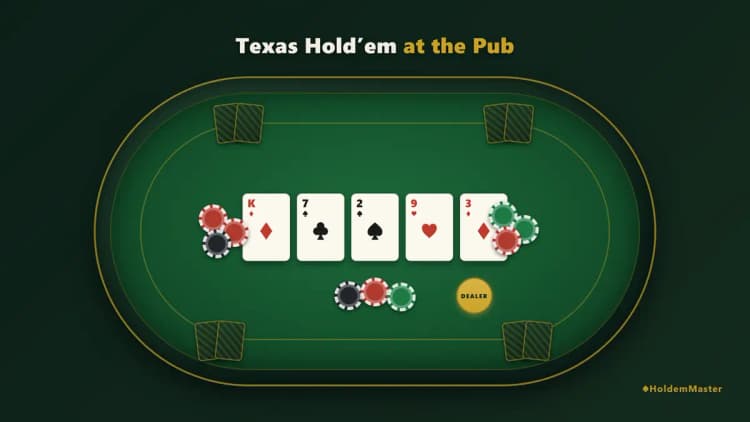
The metaphor comes straight from the ocean food chain. Sharks eat fish. A skilled, aggressive winning player circles the table looking for the weak, passive player they can profit from — and that player is the fish. The image is so baked into poker culture that a dozen related terms grew out of it (whale, minnow, guppy), all describing degrees of the same thing.
There's a companion phrase you'll hear constantly: "Don't tap the glass." It comes from aquarium signs asking visitors not to tap the tank and scare the fish. In poker it means: never criticize, lecture, or embarrass a weak player. A losing player who feels stupid gets up and leaves — taking their chips with them. Good players want the fish comfortable, entertained, and staying for one more buy-in. It's the reason experienced players stay friendly with the person stacking them.
How to Spot a Fish: 8 Telltale Signs
You usually don't need a full session — a fish reveals themselves within an orbit or two. Watch for these:
No single sign is proof — even good players limp occasionally or chase a big draw. But when you see three or four of these from the same player, you've probably found the fish — treat it as a working read and keep updating it. The most reliable single tell is passivity plus loose calling: a player who calls far too many hands but almost never raises is the classic fish, and the easiest opponent to beat because you can value-bet them relentlessly without fear of a bluff-raise. Knowing which starting hands are even worth playing is the first thing that separates them from you — the  starting hands chart is where that gap begins.
The Poker Zoo: Fish vs Shark vs Whale vs Nit vs Donkey
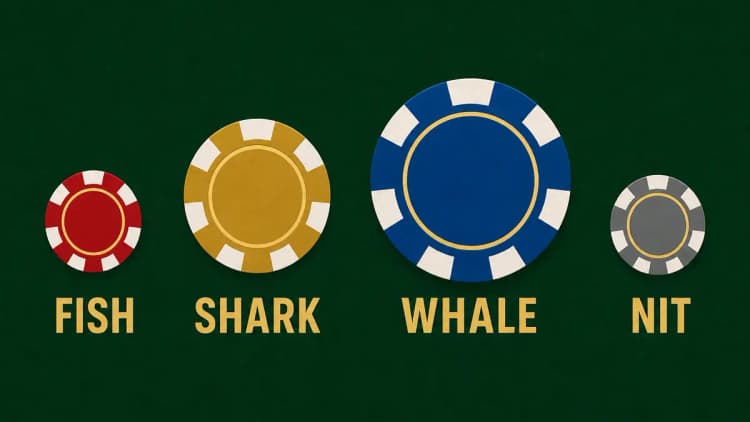
"Fish" is the headline, but poker slang has a whole bestiary of player types — and most glossaries only define two or three. Here's the one table that lays them all out, so you can name exactly who you're up against:
| Term | What it means | How they play | How you beat them |
|---|---|---|---|
| Fish | Weak, losing player (umbrella term) | Loose, passive, can't fold | Value-bet thin, don't bluff |
| Shark | Strong, winning player | Tight-aggressive, adaptive | Avoid — pick softer tables |
| Whale | A rich fish who loses big | Very loose, high stakes, doesn't care | Same as a fish, higher reward |
| Nit | Extremely tight, risk-averse | Only premium hands, rarely bluffs | Fold to most of their raises; steal blinds |
| Donkey (donk) | Fish who makes especially bad plays | Illogical, spew-y | Same as a fish — let them hang themselves |
| Calling station | Passive over-caller | Calls almost anything, rarely raises or folds | Value-bet endlessly, never bluff |
| Reg | A "regular" at a stake | Varies — not always a winner | Read them individually |
| Grinder | Pro/semi-pro playing high volume | Solid, steady, low variance | Avoid; find the recreational player |
| TAG | A style many winning players use (tight-aggressive) | Narrow range, but bets and raises it hard | Usually not a fish — respect their bets |
| LAG | A style many strong players use (loose-aggressive) | Wide range, constant pressure, bluffs often | Don't over-fold — widen your calls and 3-bets and catch bluffs |
Three distinctions other guides constantly blur, worth getting right:
- •Fish ≠ whale. A whale is a subset of fish — one who loses large sums, usually wealthy and playing high stakes loosely. All whales are fish; not all fish are whales. A whale in the game is why sharks show up.
- •Fish ≠ donkey. Near-synonyms, but "donkey" stresses bad decisions and is harsher; "fish" stresses inexperience and losing. Calling someone a donk is more of an insult.
- •A nit is usually not a fish. Nits are tight — often break-even or slightly winning. They're exploitable because their range is transparent, but they're not spewing chips like a fish (though a nit who folds away too much can still be a losing player). And LAG/TAG are styles many winning players use, not weak-player labels — only their broken versions (the reckless "maniac," the frozen "TAG fish") are leaks.
"If You Can't Spot the Sucker…": The Famous Line, Corrected

You've heard some version of it: "If you can't spot the fish at the table in the first half hour, you are the fish." It's the most quoted line in poker — and almost everyone gets it slightly wrong.
The line most people remember is from the 1998 film Rounders, spoken by Matt Damon's character:
"If you can't spot the sucker in your first half hour at the table, then you are the sucker."
Note the word: it's "sucker," not "fish." The fish version is a folk paraphrase that poker players swapped in over the years — accurate in spirit, but not the actual quote. And the idea is older than the movie. It's a gambling-world proverb with contested origins: the great road gambler Amarillo Slim included a version in the 2005 revised edition of his book Play Poker to Win, but in that same passage credited Warren Buffett "and a million other fellows" with it before him. Buffett has long used the same image to warn investors about sitting down without realising you're the least-informed person there.
So the honest attribution — the one that separates a careful source from a lazy one — is this: the line you've heard was popularized on screen by Rounders, but the idea is an old proverb with no single verifiable author. Either way, the point is the same, and it's the entire reason this article exists.
Am I the Fish? An Honest Self-Check
Here's the uncomfortable part. If you've read this far quietly hoping you're a shark, run this check first. The fastest self-diagnosis uses two stats you can track in any tracker (or estimate honestly):
| VPIP (hands played) | PFR (hands raised) | The read | |
|---|---|---|---|
| Solid player | 15–22% | 12–18% (never higher than their VPIP) | Tight, aggressive, close gap |
| Fish | 40–70% | under 10% | Loose and passive — playing everything, leading nothing |
| Nit | under 12% | under 8% | Too tight — predictable, usually not a fish |
The fish signature is the wide VPIP / low PFR gap: you're playing 45% of hands but raising only 5% of all hands dealt. That means you're calling your way into pots and hoping — one of the biggest leaks in poker. Beyond the stats, ask yourself honestly:
- •Do you call preflop raises with hands like K‑7 offsuit or Q‑9 because "they're sort of playable"?
- •Do you limp in, then call a raise, planning to "hit the flop"?
- •Do you find folding boring, so you talk yourself into staying?
- •After a bad beat, does your next 20 minutes get worse?
How to Stop Being a Fish
The good news: the fish leaks are the easiest ones in poker to fix, because they're all about doing less, not learning some secret move. In rough order of impact:
1. Play fewer hands. Fold your junk before the flop. Tightening your starting hand range alone flips more losing players into winners than any other single change.
2. Fold when you're beaten. The ability to lay down top pair when the story doesn't add up is what separates fish from everyone else. Learn to trust the action.
3. Stop chasing without a price. Learn basic  pot odds so you only draw when the math pays — not "because you might hit."
4. Raise or fold — limp less. Passive calling bleeds chips. If a hand is good enough to play, it's usually good enough to raise; if it isn't, fold.
5. Play your position. Acting last is a massive edge fish throw away. Playing more hands in position and fewer out of it fixes a huge chunk of leaks automatically.
6. Quit when you tilt. One of the most expensive fish habits is playing on after a bad beat. Recognize it and leave.
pot odds so you only draw when the math pays — not "because you might hit."
4. Raise or fold — limp less. Passive calling bleeds chips. If a hand is good enough to play, it's usually good enough to raise; if it isn't, fold.
5. Play your position. Acting last is a massive edge fish throw away. Playing more hands in position and fewer out of it fixes a huge chunk of leaks automatically.
6. Quit when you tilt. One of the most expensive fish habits is playing on after a bad beat. Recognize it and leave.
Do those six things and you stop being the money. You don't have to become a shark overnight — you just have to stop being the meal.

FAQ
The 3 Things to Remember
1. A fish is the weak player everyone else profits from — loose, passive, and usually unaware of it. Spotting the fish is the first job at any table. 2. Know the whole zoo. Fish, whale, nit, donkey, and calling station are not interchangeable — naming your opponent's exact type tells you precisely how to beat them. 3. Make sure it isn't you. A wide VPIP with a low raise percentage is the fish signature. If that's you, the fixes are the easiest wins in poker: play fewer hands, fold more, and stop chasing draws without the right pot odds.
The old line is right for a reason. Look around your next table and find the fish in the first half hour — and if you genuinely can't, the most valuable thing poker will ever teach you is that it's time to work on your own game. Start with a tighter starting hand range and a real feel for pot odds, and let someone else be the meal.